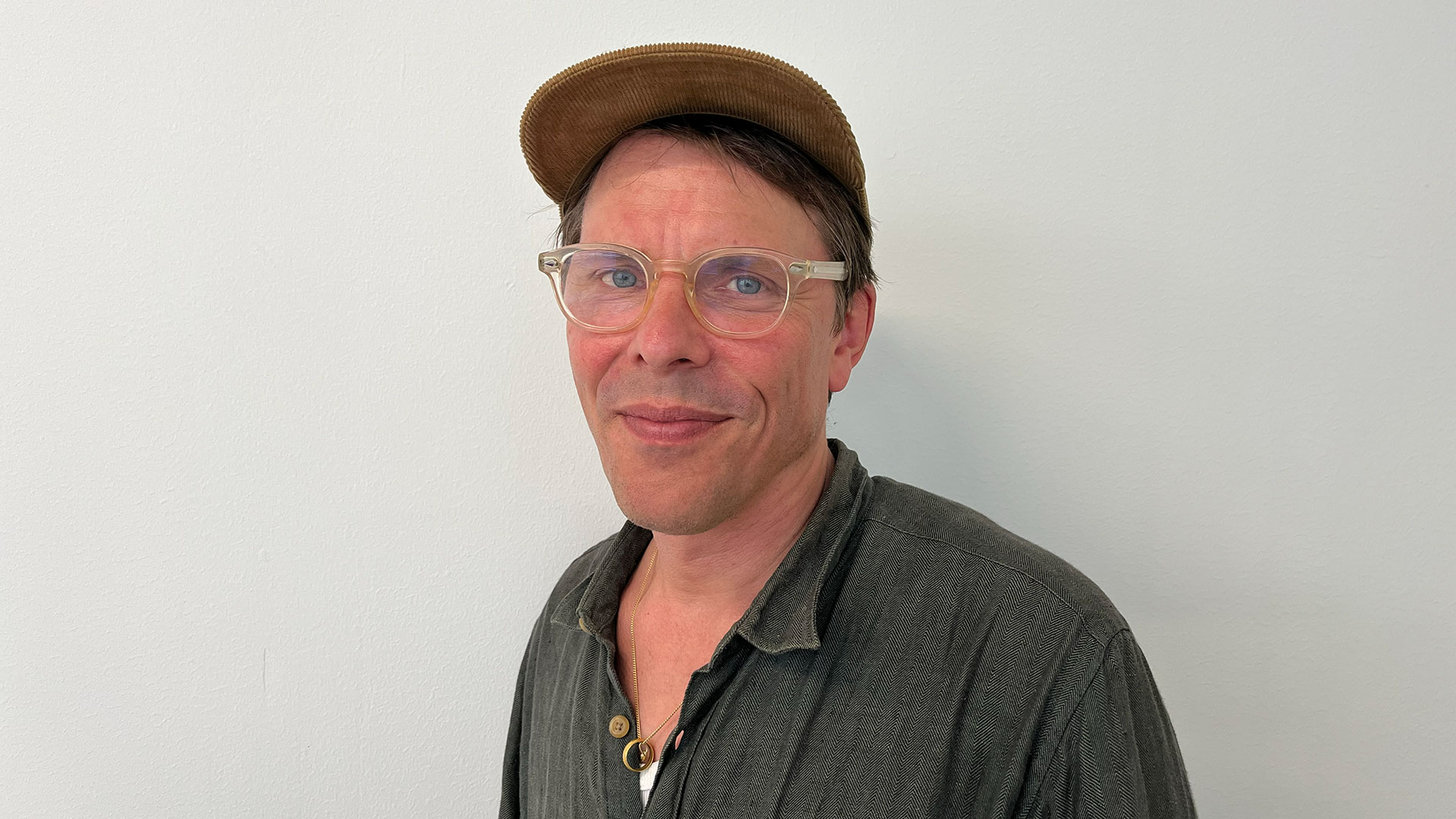
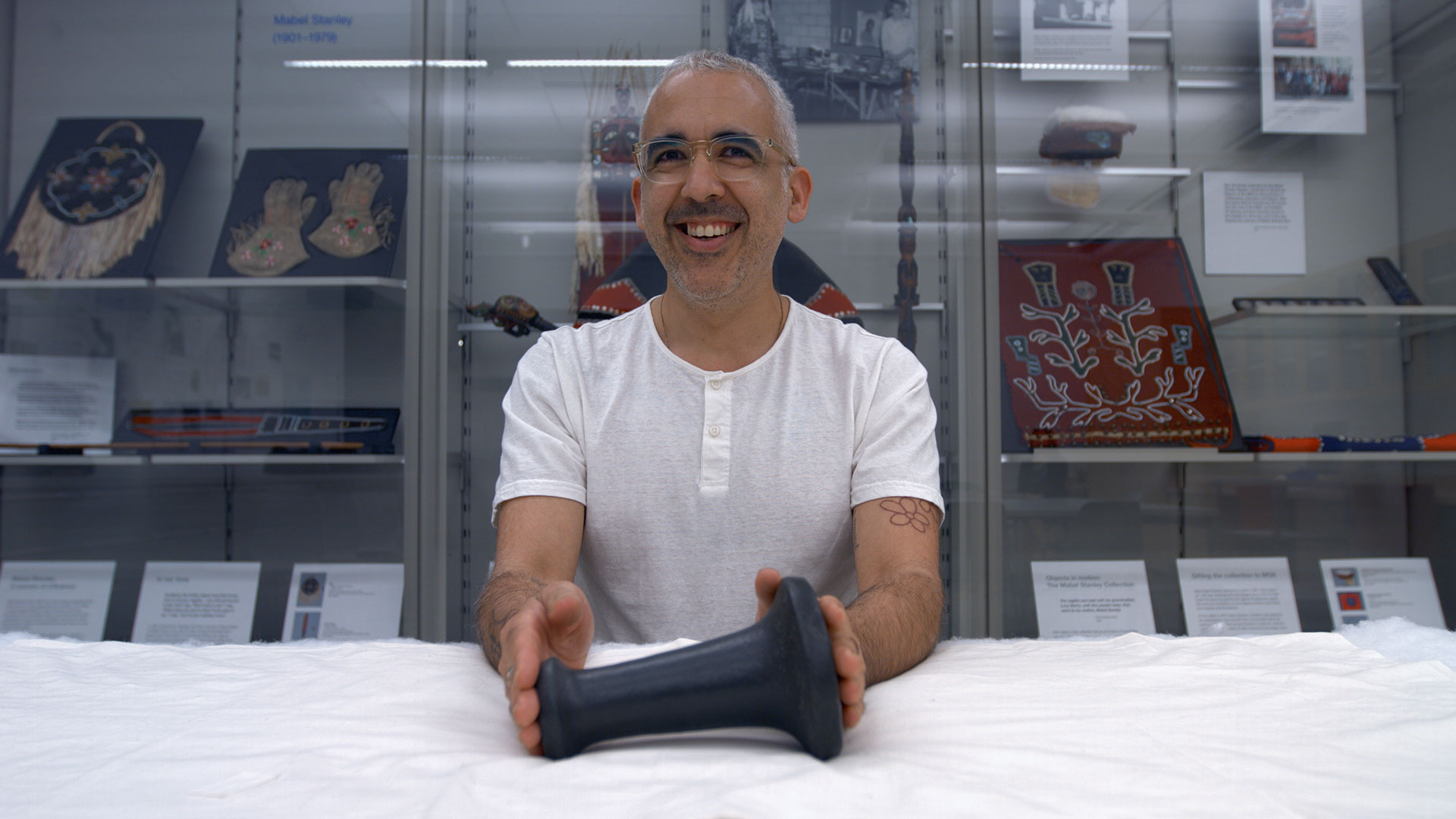
Public art is not what you think it is… says Edi Muka, curator at Statens Konstråd (Public Art Agency), during our conversation.
Most artists working today carry the wrong image of public art. A sculpture in a square. A bronze figure in front of a building. Something heavy, permanent, and made by someone else. What follows is a write-up from the audio transcript of my conversation with Edi. What he said, what it means, and what working artists should do about it. I am grateful for Edi’s time and impressed by his warmth and generosity.
What Statens Konstråd does: three forms of public art
Statens Konstråd organizes its work with artists into three distinct forms. Each has its own process, its own selection logic, and its own entry point. Most artists do not realize this and treat the agency as if it operates one way. It does not.
1. Procurement (Upphandlingar)
Commission-based selection. The agency selects an artist through a structured evaluation of qualifications and a written motivation. This is the route most artists encounter through open calls. New permanent and temporary public art is produced this way.
Open calls are listed at: https://statenskonstrad.se/om-oss/uppdrag-till-konstnarer/upphandlingar/
To submit, you must first register an account on TendSign: https://tendsign.com/
2. Competition (Tävlingar)
Contest between submitted proposals. The agency invites multiple artists to submit ideas, and the proposals themselves are compared to choose a winner. This is a different beast from procurement. In a competition you are evaluated on the proposal itself, not on a motivation letter that explains why you should be considered.
Active and past competitions are listed at: https://statenskonstrad.se/om-oss/uppdrag-till-konstnarer/tavlingar/
3. Collection (Konstkollektioner)
Statens Konstråd manages a state art collection of more than 100,000 works, distributed across government offices, embassies, tax offices, universities, and other state premises. The collection is run through two procured roles working in parallel:
External curators and consultants (Externa curatorer & konsulter): the project leaders responsible for permanent public art commissions. They are procured on four-year contracts.
Consultants for art collections (Konsulter — Konstkollektioner / Konstkonsulter): they handle acquisitions for the collection itself. There are typically five to seven of them, also on four-year contracts.
Contact details for both roles are at: https://statenskonstrad.se/om-oss/kontakt-och-oppettider/
Edi put the mission this way: a museum offers art to a public that has to come to it. Statens Konstråd brings art to where people already live and work. That mission runs through all three forms.
Where does Statens Konstråd comes from?
Statens Konstråd was founded in 1937. It exists because in the 1930s, opportunities for working artists in Sweden were scarce, and Swedish artists were leaving for Paris, Berlin, and other European capitals where there were galleries, collectors, and a chance to make a living. In 1936, the Swedish parliament passed what is known as the 1% rule. When the state builds, 1% of the construction budget should fund artistic production. The agency was established the following year to implement it.
One thing worth correcting up front. The 1% rule is often described as if it still operates as a fixed mechanism. It does not. The rule was applied directly only for the agency’s first ten years. From 1947, the agency received its budget from the government instead. Since 2018, the framework has been the Unified Policy for Designed Living Environments, agreed by parliamentary consensus, and implemented by four institutions: Statens Konstråd, ArkDes, Boverket, and Riksantikvarieämbetet (the Swedish National Heritage Board). Today the agency works on the 1% logic through annual budget agreements with major state developers like Akademiska Hus, which builds all Swedish university campuses.
The agency was just merged into a larger institution
This part is operational and worth knowing. On January 1, 2026, the Swedish government merged three institutions into one. Statens Konstråd, ArkDes (the Museum of Architecture and Design), and Moderna Museet now operate under a single umbrella, with Moderna Museet as the parent. The merger is supposed to be completed by the end of 2026.
Commissions are open globally. Acquisitions are not.
This is where international readers should pay attention.
Procurements and competitions are open globally. Anyone, from anywhere, can apply to a Statens Konstråd open call to be commissioned for new public art. The agency makes a point of this.
Acquisitions for the collection are restricted. The agency acquires existing work only from living Swedish artists, wherever they live, or from non-Swedish artists who are based and working in Sweden. If you are an international artist not living in Sweden, the agency will not acquire your existing work. You can be commissioned to make new work. You cannot be collected.
Open calls are published in two places: the agency’s website and the public procurement platform TendSign. They are published only in Swedish. Edi acknowledged this directly and recommended translating the materials with Google Translate.
The motivation letter is the most important document
This applies specifically to procurement (Upphandlingar). Competitions work differently because there you submit a proposal.
Most artists misread the procurement application as three documents of roughly equal weight: a CV, a portfolio (three to ten reference projects), and a short motivation letter (called a letter of intent). Edi was clear that this is the wrong frame.
The motivation letter (letter of intent) is the most important document. The other two documents support it.
It is roughly half an A4 page. It is not a proposal. You are not describing what you will make. You are explaining why your practice is relevant to this specific project. Each open call comes with what the agency calls an art program: a description of the site, its history, architectural drawings or renderings, and a curatorial theme or vision. The motivation letter is your response to that material.
Two things Edi said matter here, both of which most artists get wrong.
First, the reference projects do not need to be prior public-space works. The agency knows that younger artists rarely have public-space experience. They want to see how you think and how you have approached problems before. They want to see your practice. They are not screening for whether you have already made a sculpture in a square.
Second, do not re-use the same motivation letter across applications. You can keep the same portfolio, updating it when there is new work. You cannot keep the same motivation. The agency reads the motivation paired with the reference projects and tries to picture how you would approach the assignment. A recycled motivation tells them you are sending applications by volume, hoping someone will read one.
For working artists, this collapses into a single instruction. The motivation letter is not a template. It is the most important document. Treat it that way.
What happens if you are shortlisted?
Most artists never see this part of the process, so it is worth describing.
A typical procurement runs in two paid stages. The Public Art Agency Sweden screens applications and helps the curator produce a shortlist, which is presented to the reference group. The reference group consists of representatives from the developer commissioning the building and the user, the institution that will occupy the premises. The reference group selects up to three artists, who are paid a variable amount to submit a deepened motivation. From there, one or more are selected to develop a sketch, paid 80,000 SEK for roughly two months of work.
This is worth pausing on. The reference group is not a feedback body that arrives late in the process. They are baked in from the start. They participate in selecting the shortlist, they meet you mid-sketch, and they make the final call on which proposal gets realized. The motivation letter is being read with them in the room, not just the curators. The realization contract for the selected artist roughly falls between 0.5 and 2.5 million SEK ($50,000 to $260,000), depending on the scope of the commission. Some procurements run two parallel sketches (indoor and outdoor, for example) with separate contracts. The exact structure varies per call.
The process is under contractual secrecy. You do not know who else has been invited at the bid stage or the sketch stage, and the agency will not tell you.
Halfway through the sketch period, there is a meeting. It runs in two stages. First the artist presents to the curators internally at Statens Konstråd. Then the work is presented to the reference group, which is the body of people who will live with the artwork on the site. Both groups give feedback, conceptual and practical. The artist then has the second half of the sketch period to respond.
Sometimes, when proposals have not matured enough, the agency extends the sketch period. Final commission budgets vary widely. There is no average. The budget comes from the commissioning developer, not from the agency.
This is, by the standards of the contemporary art system, an unusually fair piece of paid labor. Most grant systems extract free proposal work from applicants and pay no one until something is realized. Statens Konstråd pays at the bid stage and again at the sketch stage. It is still a competitive process with a single winner. Calculate accordingly. But it is not nothing.
Two examples of what gets commissioned
Two of the projects Edi presented give a useful sense of the range.
The first is Future Island (2023), a permanent commission at Albano, the new campus area being developed at Stockholm University. The work was made by OOZE (Eva Pfannes and Sylvain Hartenberg) together with Slovenian artist Marjetica Potrč. It is, literally, an artificial island, built using stones, gravel, and flora dug up from the site during the foundation work for the new building. It is, literally, an artificial island, built using stones, gravel, and flora dug up from the site during the foundation work for the new building. The island is divided into two zones. One half is sustainably heated to be five degrees Celsius warmer than the other, using a system of pipes running through the stones, powered by solar panels installed on the site. The same plants are planted in both zones. The work makes visible, over time, how soil, vegetation, and ecosystems behave under sustained warming.

The artwork is also a research instrument. The science department in the adjacent building uses the island as live data, studying how soil, vegetation, and ecosystems behave under sustained warming. The artwork makes the climate change issues visible where students walk past every day. Edi’s framing was that when the agency commissions, they do not only consider the building. They consider the organization that will inhabit it. The art piece connects to the people who will use the space.
The second project is Kepsen (The Cap, 2020), in Råslätt, a neighborhood just south of central Jönköping. It originated as a temporary intervention through a government program directed at socially underserved areas, then took permanent form. Civil society in the neighborhood could submit ideas through an open call. The submission that became the commission came from Mix Dancers, a young women’s dance company and school run by local youths, started as a reaction to the lack of leisure activities for girls in the area.

The agency first invited video artist Johanna Billing to make the video work In Purple with the dancers. Then they commissioned the art and architecture group MYCKET to work with the dancers and the wider neighborhood to design a permanent outdoor dance space. The structure is shaped like a cap and painted purple, the collective’s color. It was built collaboratively with kids and families through workshops. It is still in active use, both for the dancers’ performances and for community gatherings, weddings, and birthdays. The structure is shaped like a cap and painted purple, the collective’s color. It was built collaboratively with kids and families through workshops. It is still in active use, both for the dancers’ performances and for community gatherings, weddings, and birthdays.
The two projects do different work. Future Island operates as research infrastructure embedded in an institution. The Cap operates as social architecture co-authored with the community that uses it. Both count as public art under the agency’s working definition. Neither is a sculpture in a square.
Three doors most artists never open
Most artists assume the open call is the only way in. It is not.
The first door is the studio visit. Curators at Statens Konstråd do studio visits. The agency’s recommendation, from Edi directly, is to send studio visit invitations and exhibition invitations to both the curators (the art unit) and the consultants (who handle acquisitions). Even when the consultants are not buying for a relevant commission, they register the artists they encounter for future reference. Contact information is on the agency’s website.
The second door is the regional portfolio viewing. The agency runs these annually, partnering with one Swedish region per year and travelling there to meet artists. In 2026, the region is Västerbotten. The regional partner runs the open call and selects which artists the curators will meet. The agency does not pick the participants directly. They also invite curators from other institutions to join, which compounds the value of being seen.
The third door is the strategic acquisition. The agency allocates a separate annual budget for strategic acquisitions, managed by the acquisition committee, which is led by the director of Public Art Agency Sweden. Any curator at the agency can send suggestions for works to be considered. Edi’s example was Anna Odell’s video piece made during a residency at the psychiatric studies department of Uppsala University. The agency bought the work after seeing it shown publicly and arranged for it to be installed permanently at the institution where Odell had been in residency. This is worth understanding mechanically: the consultants handle routine acquisitions, but strategic acquisitions move through curators submitting names to the committee. If you want to be considered for one, the curators need to know your work. All acquisitions operate under the EU principle of equal treatment for public procurement procedures.
One distinction worth drawing clearly. Statens Konstråd does not fund artist-initiated proposals. If you have a project idea and you want funding to realize it, that is Kulturrådet (the Swedish Arts Council), not Statens Konstråd. The agency develops projects together with artists from a starting site or context. They do not give money to ready-made ideas.
Takeaways
As an atist, your priority is clear: research the Statens Konstråd website and TendSign for open calls relevant to your practice. Put the curators and consultants on your studio visit and exhibition invitation list NOW, not later. If you are based in or near a Swedish region, watch for the annual portfolio viewing call. Do not send the agency project pitches. That is a different institution.
So what?
A few things stand out from the conversation, beyond the procedures.
The system rewards site-specific articulation more than portfolio strength alone. This means the writing matters as much as the work. An artist with a strong practice and a generic motivation letter will lose to an artist with a less established practice and a precise reading of the site.
The procurement process pays at two stages: the bid and the sketch (80,000 SEK). It is a real piece of compensated speculative labor in a system that mostly extracts free work from applicants. It is also still a competitive process. Calculate the odds before you commit.
For international artists, the eligibility split shapes the relationship the institution can have with you. Procurements and competitions are the entry points. Collection acquisitions are not available unless you relocate. This is worth knowing before you build your strategy.
The part of the system that compounds is not the open call. It is the studio visit, the exhibition invitation, the portfolio viewing, the curator who registers a name for later. Open calls are episodic. Curatorial relationships are durational. Most artists invert this priority and apply repeatedly without ever inviting a curator into the studio.
Note: The thumbnail of the post re-uses an image of German artist Katharina Grosse’s “CHOIR” project at Art Basel 2025, in Switzerland