I am sharing a list of the best art grants over $10K for visual artists. To access new opportunities, you need a system to gather high-quality signals that other artists miss or ignore.
How to Track Art Grants Over $10K?
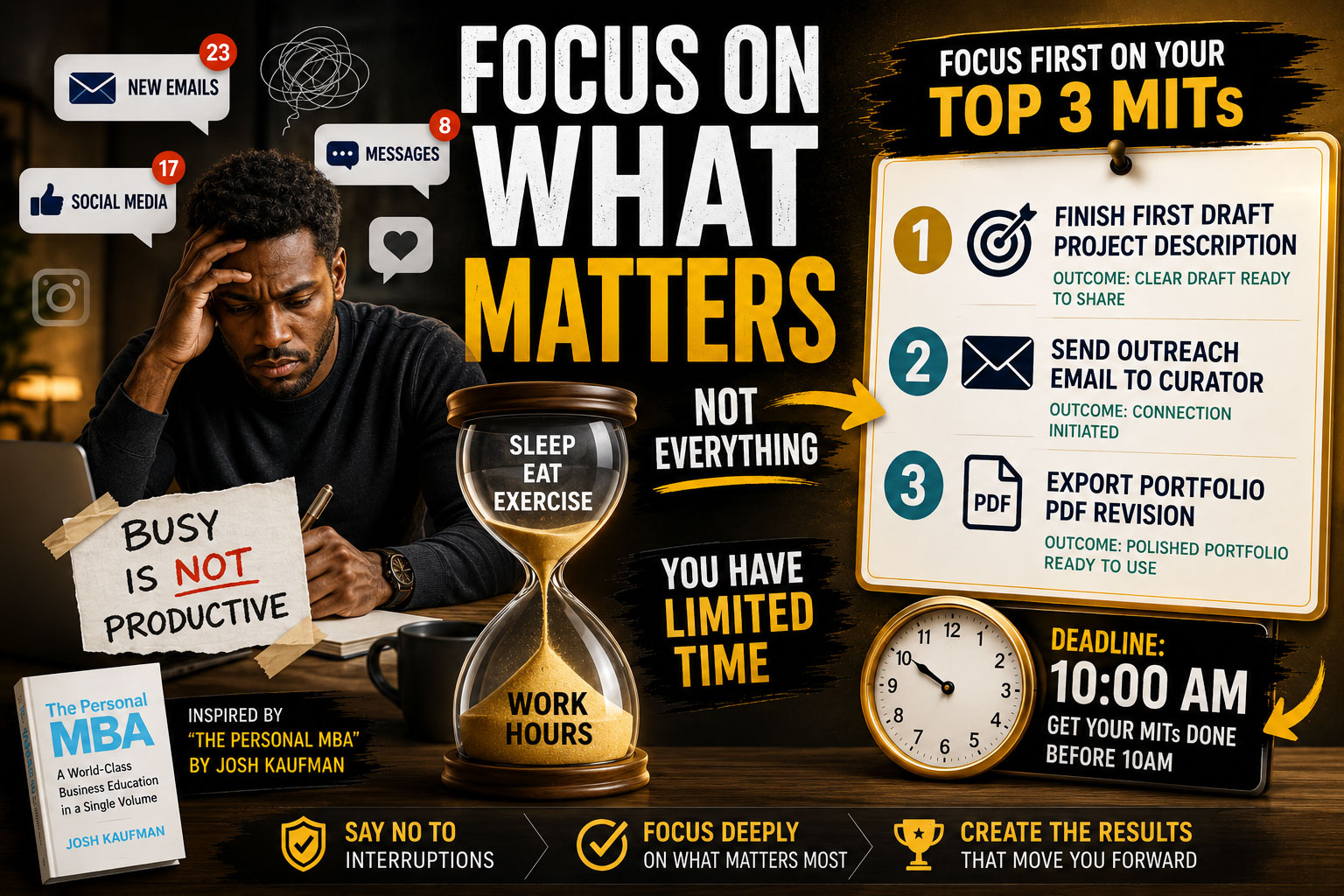
I use several techniques to stay informed about funding calls. For example, send yourself an email through Gmail’s schedule send feature, reminding you about the deadline. It requires to check the date on the funder’s website, sending yourself a scheduled email that will be sent in the future perhaps 2 to 3 weeks before the deadline. So you can apply. It takes 15 minutes and you stay in the loop. You could also remind yourself when the application call opens, but I prefer the pressure of the deadline.
Secondly, I subscribe to newsletters on funders’ websites, so I never miss a launch. I also follow these institutions on social media.
Tracking grants is a discipline. Most artists wait for opportunities to find them. That is backwards. Build a simple system and run it every week. Open a spreadsheet. Name it Grant Pipeline. List every funder you care about, the opening date, the deadline, and the amount. Review it every Monday morning. Fifteen minutes. That is your grant practice for the week.
You can also use Google Alerts. Set an alert for the name of any funder you follow. Google will email you when they publish new content. It is free, it takes two minutes to set up, and it means you never miss an announcement. Combine that with your scheduled Gmail reminders and you have a system most artists do not have.
Build the Practice Before You Apply for Art Grants
Before you chase any grant, you need the foundations in place. A strong portfolio, a sharp artist statement, and a CV that earns trust decide whether your application gets read at all. Without these, even the best art grants for visual artists will pass you by.
Your portfolio is the first thing a jury sees. It needs to show a coherent body of work, not your greatest hits from ten different directions. Pick a thread. Follow it. Make sure your images are high resolution, well lit, and properly labeled with title, medium, dimensions, and year.
Your artist statement needs to answer one question: why does this work exist? Not what it looks like. Not how you made it. Why. Keep it under 300 words. Read it out loud. If it sounds like an academic paper, rewrite it. You are an artist, not a theorist.
Your CV needs to follow a standard gallery format. Curators and grant panels scan CVs in seconds. If yours is hard to read, it works against you. I published a free CV template based on a leading gallery standard. [Download it here] Use it.
How to choose which art grants over $10K to apply to first?
Do not apply to everything. Apply strategically. Start with grants that match your current career stage. If you are early career, look for grants that explicitly welcome emerging artists. Applying to a grant built for mid-career artists with ten solo shows is a waste of your time right now.
Match the grant to your work. If a funder supports community-engaged practice and your work is studio-based, move on. Read the mandate carefully. Funders are looking for alignment, not just quality.
Finally, apply to grants where you meet every eligibility requirement. Citizenship, residency, discipline, career stage. If you are unsure about one criterion, email the funder and ask. They respect artists who read the fine print.
Start with two or three grants per cycle. Do them well. A strong application to three grants beats a weak application to fifteen.
Treat your artistic practice as a business. Show yourself the respect and quality you deserve.
Bless you.
A
After Nature. Ulrike Crespo Photography Prize
Fundación Ama Amoedo [Latin American]
The Artadia Awards [US-based artist]
B
Backslash Fellowship Cornell Tech
La Becque residencies
Botin Foundation
C
Cavendish Arts Science Fellowship
Creative Capital Award [US-based artist]
D
Douglas A. Garofalo Fellowship
E
Edouard Glissant Art Fund
The Elizabeth Greenshields Foundation
Experimental Foundation
G
The Gottlieb Foundation [US-based artist]
Guggenheim Fellowship [US-based artist]
H
Harpo Foundation [US-based artist]
Harvard Radcliffe Fellowship Program
Haus für Medienkunst
Hyundai VH AWARD
N
NXTHVN Fellowship Program
P
Princeton Arts Fellowship
Pollock-Krasner Foundation [US-based artist]
Q
QM-Jerome Foundation Fellowship [New York-based artist]
R
Rijksakademie
Rome Prize (American Academy in Rome) [US-based artist]
S
The Satellite Fund
Spector Prize
Supporting Act Foundation [Belgium, France, Germany, Greece, Ireland, Italy, Netherlands, Portugal, Spain, or the UK Based Artists]
W
The Wernick-Richman Visiting Professorship