Why the oldest trick in human psychology is being used on you and what to do about it?
You’ve felt it before, even if you couldn’t name it.
Someone buys you a coffee. Now you feel like you should get the next round. A coworker covers for you on a Friday. Now you feel vaguely obligated when they need a favor, even if you’d have said yes anyway. A company sends you a free tote bag and suddenly you feel weird about canceling your subscription.
This feeling is ancient. It’s wired into you. And every day, smart people — marketers, negotiators, politicians, bosses, and sometimes the people you love most — are quietly using it to get what they want.
It’s called reciprocity. And once you understand how it works, you’ll never experience a “free gift” the same way again.
The Rule That Built Civilization
Reciprocity is the social contract that predates every legal contract. The idea is simple: I give you something, you give something back. I help you, you help me.
Societies that mastered this exchange survived. Those that didn’t fell apart. The anthropologist Marcel Mauss observed that in virtually every human culture, there are three distinct obligations: the obligation to give, the obligation to receive, and the obligation to repay. Not suggestions. Obligations. Encoded into the deep grammar of social life.
This is why, as Robert Cialdini writes in Influence, “there is no human society that does not subscribe to the rule.”
The rule doesn’t just oil the wheels of commerce. It’s the foundation of trust. When you know someone will return what they borrow, you lend. When you know your neighbor will watch your house while you’re away, you watch theirs. Reciprocity is what made human cooperation — and therefore civilization — possible. The problem is that this ancient wiring doesn’t come with a manual.
A Flower You Didn’t Want Costs You Anyway
In the 1970s, Cialdini spent time observing airport solicitors for the Hare Krishna Society. Their technique was clever, and a little unsettling.
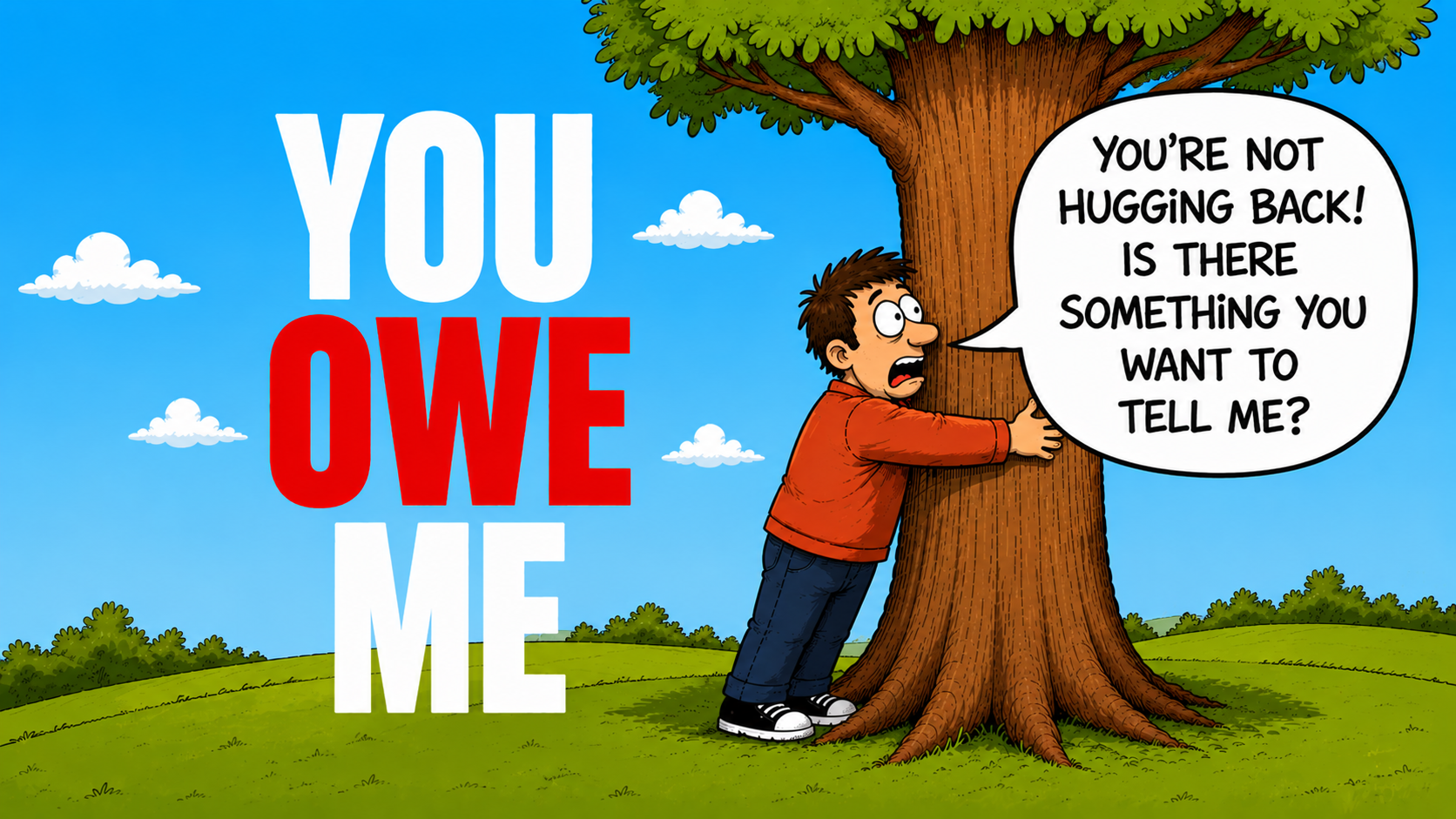
A member would approach a stranger and press a flower into their hand. Surprise and social reflex combined: the person took it. The moment they did, something shifted. The solicitor would then ask for a donation. The target, now holding an unwanted gift, felt the pull of reciprocity like a physical force. They’d donate, often two dollars, then walk directly to the nearest trash can and throw the flower away.
The extraordinary part: the flower had already been retrieved from a previous trash can. It was being recycled — donated, discarded, recovered, and donated again. A single flower triggering guilt, over and over.
This is reciprocity in its rawest, most visible form. A gift you didn’t ask for. An obligation you didn’t agree to. A donation you kind of resented making.
And yet — you probably would have made it too.
The Free Sample Isn’t Free
Walk through a grocery store on a Saturday afternoon and you’ll encounter this everywhere. Someone hands you a small cube of cheese on a toothpick. You eat it. Now you feel a strange pressure to buy the cheese.
This isn’t irrational. It’s just reciprocity doing what reciprocity does.
The same dynamic runs through most of modern marketing. Free trials aren’t designed purely to showcase a product. They’re also designed to create a psychological sense of debt. You’ve had it in your home. You’ve gotten used to it. Now canceling feels like taking something that isn’t quite yours.
The charity sector has figured this out too. Organizations that include small unsolicited gifts with donation requests — personalized address labels, a keychain, a card — can nearly double their response rates compared to letters sent alone. You didn’t ask for the address labels. But now they’re yours. And suddenly, the donation request feels less like a cold ask and more like returning a kindness.
This is the quiet genius of the gift. Once received, it changes the emotional terrain of the conversation.
Why Your Brain Does This
The discomfort you feel when you receive but don’t reciprocate has a name: inequity aversion. Your brain genuinely experiences unreturned gifts as a form of imbalance, like a visual illusion your mind keeps trying to correct.
Being in someone’s debt activates low-grade anxiety. Not the sharp panic of danger, but a diffuse unease — the kind that quietly motivates behavior until it’s resolved. This is why people at networking events talk about “following up” after someone introduces them to a useful contact. Why people feel guilty after a first date where someone paid. Why someone who invites you to dinner twice makes you feel, on a cellular level, like you need to have them over.
The brilliant and slightly unsettling thing about this mechanism is that it doesn’t require you to like the person who gave you something. In a landmark study, researcher Dennis Regan found that subjects bought roughly twice as many raffle tickets from someone named Joe when Joe had first bought them an unsolicited Coke — regardless of how much they actually liked Joe.
Think about that. The gift didn’t need to generate affection. It just needed to generate obligation.
When Reciprocity Is Beautiful
Let’s not make this entirely grim. Reciprocity used honestly is one of the most generative forces in human relationships.
The mentor who shares their contacts expecting nothing, who later finds doors opening for them — not because they calculated it, but because generosity tends to ripple. The colleague who stays late to help you finish a project and whom you instinctively look out for later. The friend who shows up with soup when you’re sick and for whom you’d rearrange your schedule without a second thought.
In healthy relationships — professional, personal, creative — reciprocity operates as a kind of ambient trust. No ledger is kept. No tab is run. But there’s a felt sense of equity, and it keeps people invested in each other.
In the art world, this plays out in interesting ways. Artists support each other’s openings, write recommendation letters, share residency opportunities. The informal economy of mutual support is what sustains creative communities. Nobody explicitly calculates. But everyone knows, more or less, who shows up and who doesn’t.
The same logic holds in workplaces, friend groups, even families. The people who give freely — time, knowledge, attention — tend to be surrounded by people who reciprocate. Not always immediately. Not always perfectly. But the pattern holds.
When Reciprocity Becomes a Trap
Here’s where things get harder.
Reciprocity becomes manipulative when the gift is engineered to extract a return that far exceeds its value. When someone gives you something small and uses it to ask for something large. When the giving isn’t genuine — it’s a setup.
This happens everywhere once you know to look for it.
A luxury car dealership offers you a complimentary coffee and lets you sit in the car for a long test drive. A high-end real estate agent takes you to lunch before showing you properties. An influencer receives a package of free products from a brand and feels — without anyone explicitly asking — a vague pressure to post about it. A family member buys you an expensive gift, then references it the next time they need something.
These aren’t equivalent exchanges. They’re asymmetric reciprocity: a small investment in the hope of a large return.
Dating runs through this logic too, sometimes darkly. “I paid for dinner” has been used for centuries to imply an obligation that was never agreed to. The gift was never a gift. It was a down payment on an expectation.
How to Recognize When It’s Happening
Here are the signals that reciprocity is operating on you in a way you didn’t choose:
You feel obligated to someone you’re not sure you like. The feeling of indebtedness is a useful diagnostic. If you’re doing something for someone primarily because they did something for you — not because you genuinely want to — reciprocity is in the driver’s seat, not you.
A gift arrived before a request. The chronology matters. In honest generosity, giving and receiving are separate from negotiation. When a gift precedes an ask — especially immediately — that’s a trigger worth noticing.
The exchange feels unequal but you can’t say no. When someone has given you something you didn’t ask for and now you feel trapped — this is the uninvited debt at work. You didn’t open the ledger. They did.
You feel relieved rather than joyful. Genuine giving should feel warm. Obligatory giving feels like resolution. If you’re “buying cheese you don’t even like” just to end the discomfort, that’s your tell.
Staying Aware Without Becoming Cynical
This is the tricky part. Because the response to understanding manipulation can be a kind of joyless suspicion — where every gift looks like a trap and every kindness looks like an invoice.
That’s not the goal. The goal is clear-eyed generosity.
A few practical anchors:
Distinguish invited from uninvited. You don’t owe anyone anything for a gift you didn’t request. You can receive gracefully without incurring a debt. “Thank you” is not a promess. Accepting something with appreciation is enough.
Separate the gift from the ask. When someone gives you something and then asks for something in return, evaluate the request on its own merits. Would you say yes if there had been no gift? That question cuts through the reciprocity noise.
Give without keeping score — and notice when others don’t. In long-term relationships, chronic imbalance is real information. Not everyone who has ever owed you a favor needs to repay it. But if you consistently give and the other person consistently doesn’t, that’s not about reciprocity. That’s about character.
Be skeptical of “free.” Nothing is free. That’s not cynicism — it’s clarity. Free trials want your inertia. Free samples want your guilt. Free gifts from charities want your goodwill. You can take the gift and still make your own decision. But knowing the game is being played puts you back in control.
The Oldest Force in the Room
What makes reciprocity so fascinating — and so important to understand — is that it operates below conscious awareness most of the time. You don’t decide to feel indebted. You just do. The feeling arrives before the thought.
That’s why marketers, negotiators, and social engineers invest so heavily in triggering it. They’re not trying to reason with you. They’re trying to create a feeling that reasons you for them.
But knowing this changes something. Not everything. You’ll still feel the pull — that’s just being human. But you can feel it and still pause. Still ask: Did I choose this? Do I actually want to give this in return? Or am I just trying to resolve a discomfort I didn’t consent to?
A stranger gives you something small and unexpected. You feel you owe them something back. Not weakness. Just humanity. Most of us would have done the same.
The question isn’t whether reciprocity will influence you. It will.
The question is whether you’ll be the one deciding what to do about it.
Adapted from ideas explored in Robert Cialdini’s Influence: The Psychology of Persuasion (1984). All examples, framings, and reflections are original.