Most artists spend their careers seeing only the visible side of the art world.
We see exhibitions. We see galleries. We see openings. We see artworks hanging on walls and sculptures standing in public squares.
What we rarely see is what happens after an artwork enters a public collection.
Where does it go?
Who takes care of it?
How is it tracked?
Who decides where it will be displayed?
And what happens when thousands of artworks must circulate across an entire country?
Recently, I had the opportunity to visit the storage facilities of Statens konstråd, Sweden’s Public Art Agency, with art consultant Magnus Mattsson. What I expected was a warehouse filled with artworks. What I discovered instead was an institution that operates somewhere between a museum, a library, a logistics centre, a cultural agency, and a public service.
The visit offered a fascinating glimpse into how public art actually works in Sweden.
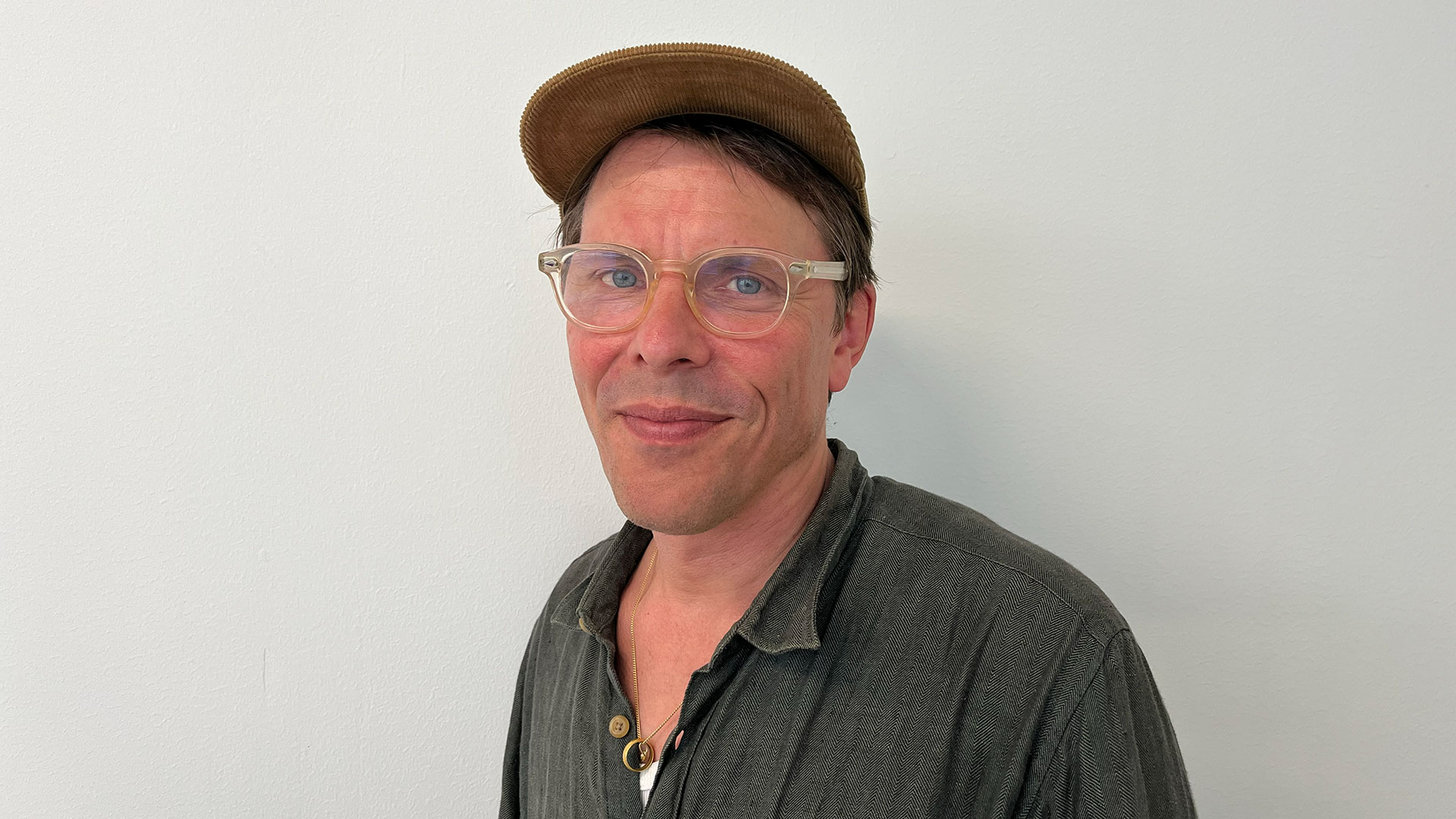
Meeting Magnus Mattsson
Magnus Mattsson is an art consultant at Statens konstråd.
Like many people working in public art, his path into the profession was far from linear.
Before becoming an art consultant, Magnus worked as an artist. He studied at the Royal Institute of Art in Stockholm. Along the way he also worked as a gallerist, a technician, a museum installer.
His professional experience includes work with institutions such as Moderna Museet and Liljevalchs.
This breadth of experience immediately became apparent during our conversation.
Magnus understands artworks not only as cultural objects but also as physical things that must be transported, stored, installed, maintained, documented, and ultimately encountered by people.
That perspective shaped much of what I learned during the visit.
The Collection You Never See
When people think of public art collections, they often imagine climate-controlled museum vaults hidden behind steel doors.
The reality at Statens konstråd is different.
Walking through the storage facility felt less like entering a museum repository and more like entering a vast library.
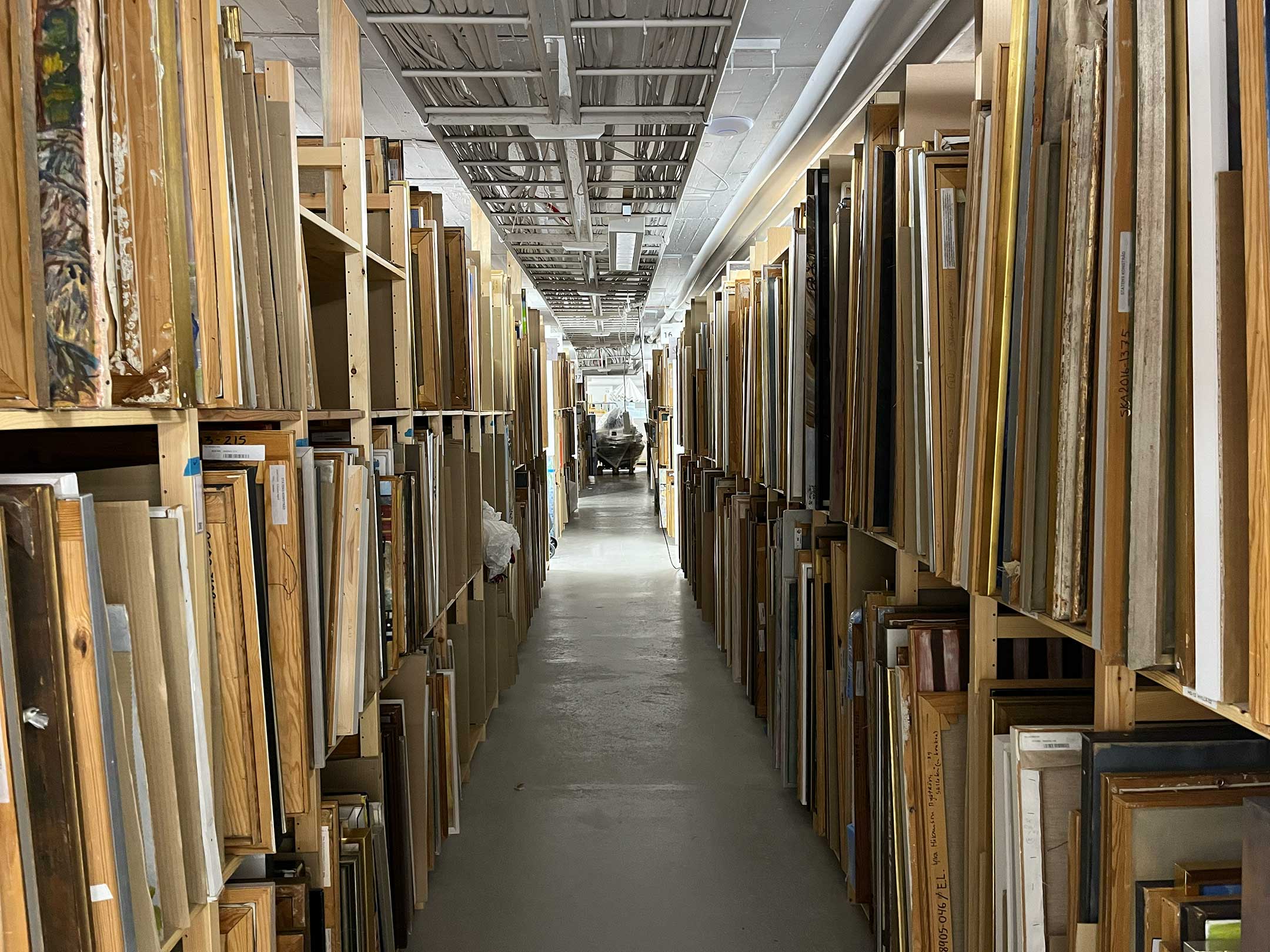
Long aisles stretched into the distance.
Paintings stood side by side in storage racks.
Prints, drawings, sculptures, ceramics, textiles, and framed works filled shelves and mobile storage systems.
The scale was impressive.
Yet what struck me most was not the quantity of art.
It was the institution’s philosophy.
Unlike many museums, whose primary mission is preservation, Statens konstråd is fundamentally concerned with access.
The collection exists to be seen.
A Collection That Lives in Public
One statistic surprised me more than anything else.
According to Magnus, roughly eighty percent of the collection is currently out in the world.
Think about that for a moment.
Most museum collections keep the majority of their holdings in storage. Only a small percentage is on public display at any given time.
At Statens konstråd, the opposite logic dominates.
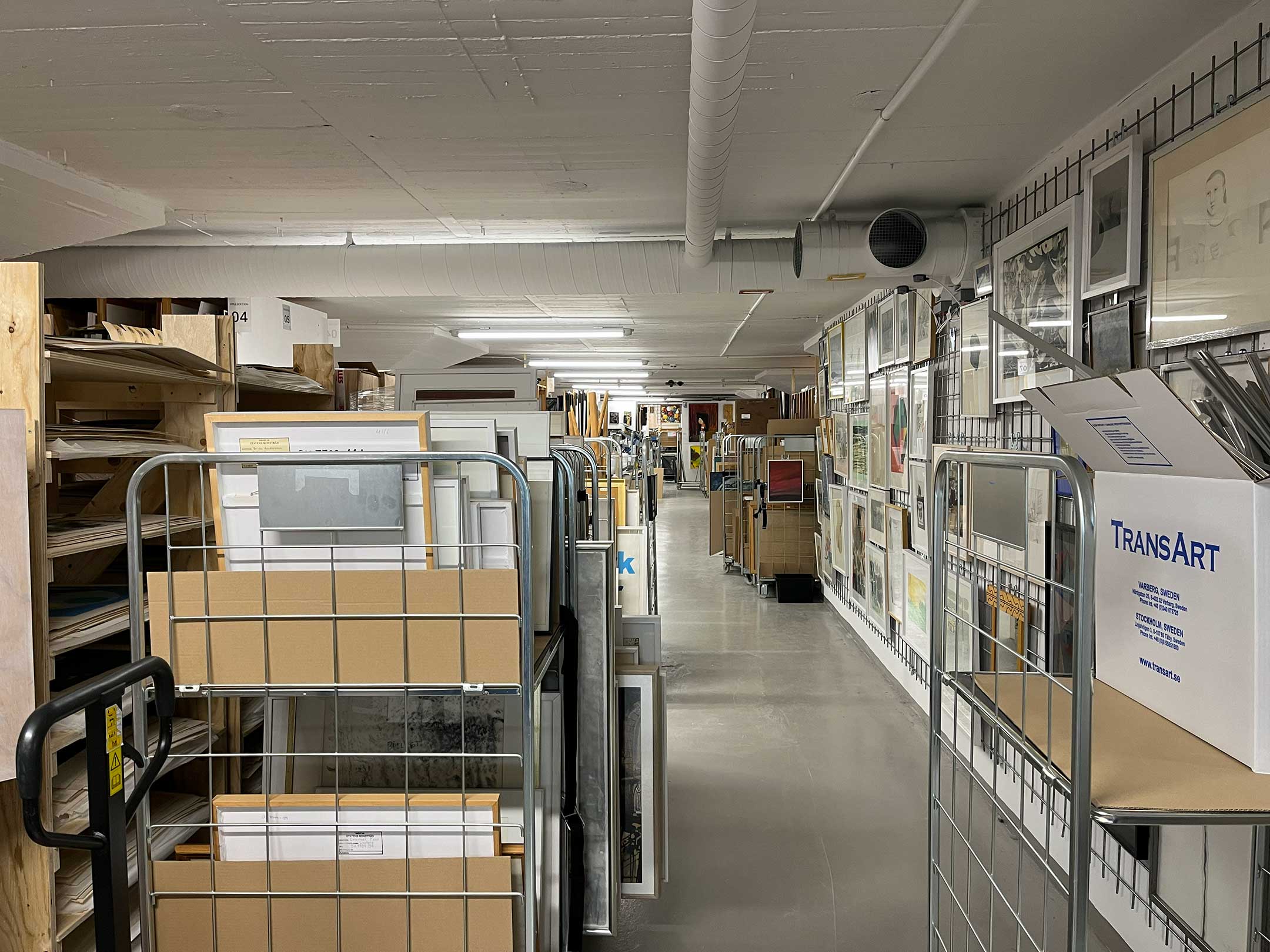
Artworks are actively distributed throughout Swedish public institutions such as government offices, universities, administrative buildings, some medical research centers, and public agencies.
The goal is not simply to preserve art.
The goal is to place art where people actually spend their lives.
This is a radically democratic idea.
A public collection funded by taxpayers should not remain hidden in storage.
It should remain visible.
It should become part of everyday life.
A nurse on a hospital shift.
A student walking through a corridor.
A civil servant arriving at work.
All of them encounter art because of this system.
The Risks of Accessibility
Of course, there is a cost.
Museums often operate under strict conservation standards.
Temperature.
Humidity.
Lighting.
Handling procedures.
Transportation protocols.
Everything is designed to minimise risk.
A circulating public collection faces a different reality.
Artworks move.
They travel.
They are installed.
They are removed.
They are handled by people who are not conservators.
Occasionally, damage occurs.
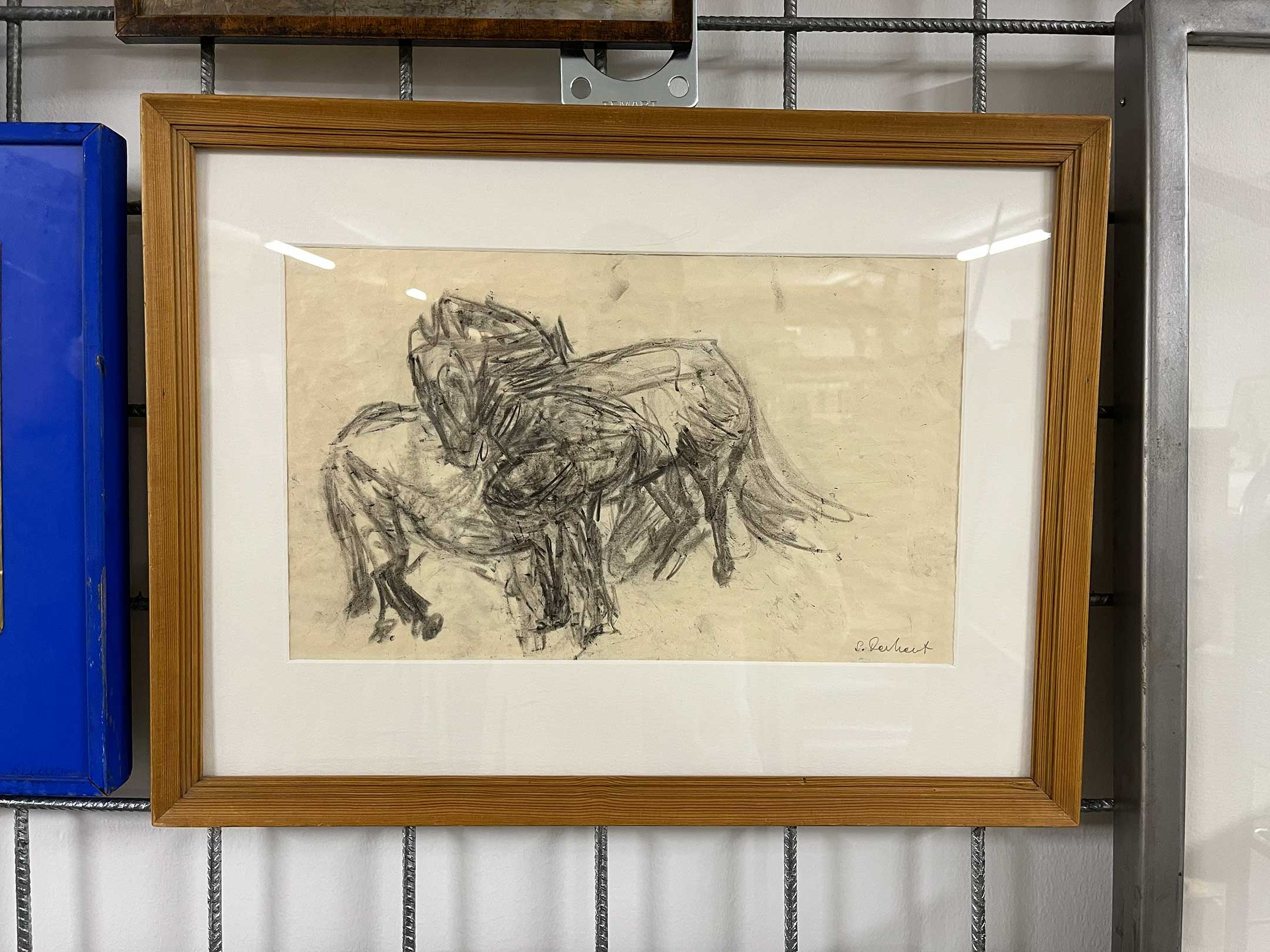
Magnus spoke openly about this challenge.
When artworks are loaned to institutions, they become the responsibility of custodians within those organisations. Most take excellent care of the works entrusted to them.
But accidents happen.
Frames get scratched.
Surfaces get marked.
Objects suffer wear over time.
This reflects an unavoidable trade-off.
Maximum preservation often means limited access.
Maximum access inevitably introduces risk.
Statens konstråd appears willing to accept some degree of risk in exchange for ensuring that art remains present in public life.
That choice says a great deal about the institution’s values.
Art Is Also Information
Another fascinating aspect of the visit came from a conversation with Simon, who showed me how the collection is managed digitally.
Like any major collection, Statens konstråd maintains databases that track artworks and their histories.
What surprised me was the complexity of the system.
There is a public-facing database that allows users to explore the collection.
There is also an internal system used to manage the collection itself.
An artwork is never simply an object.
It is also a record.
Where is it located?
Who currently has custody of it?
When was it installed?
Has it been moved?
Has it been damaged?
When is it due to return?
What condition was it in when it left?
What condition was it in when it came back?
Every movement creates information.
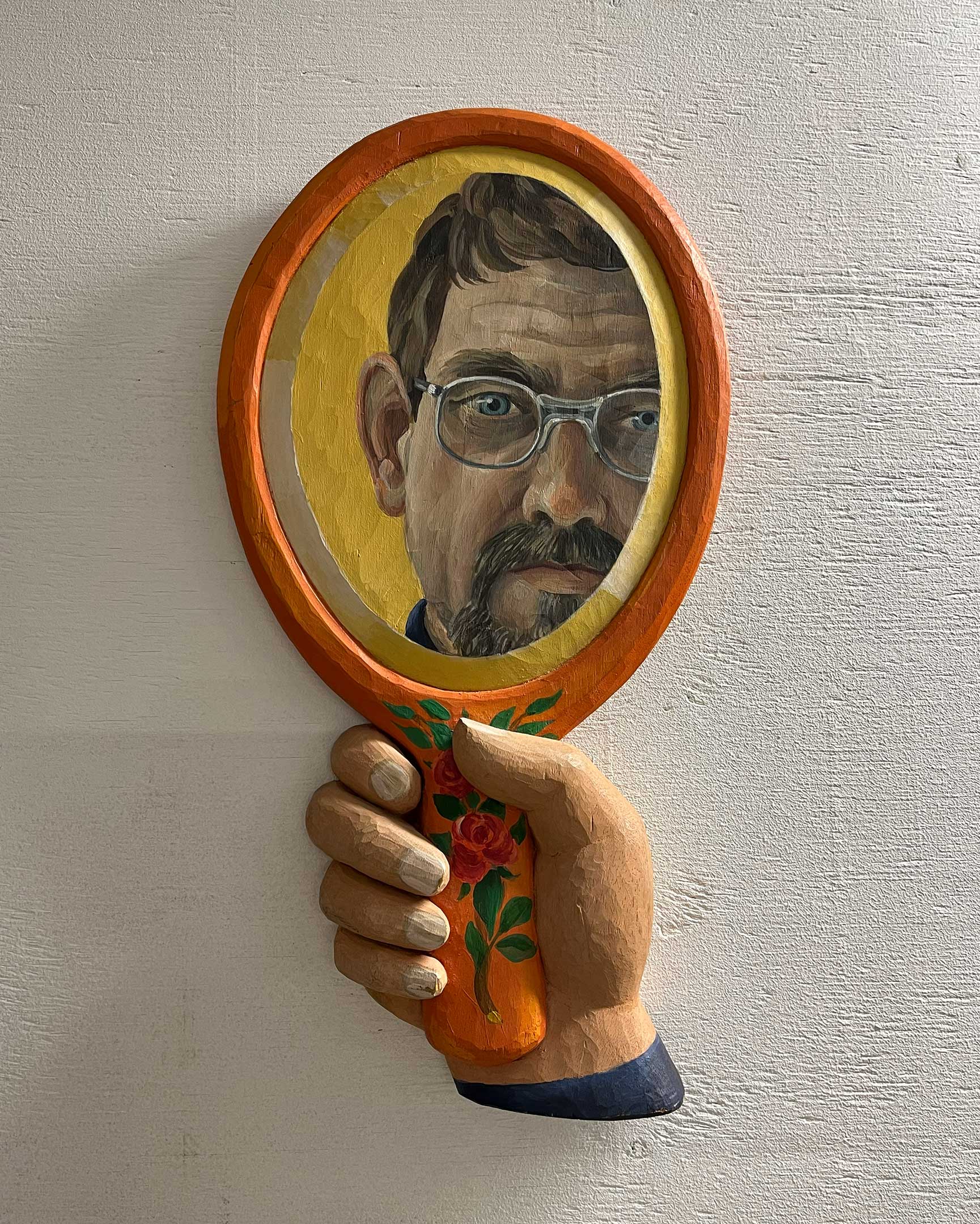
Every loan creates documentation.
Every installation becomes part of the artwork’s institutional biography.
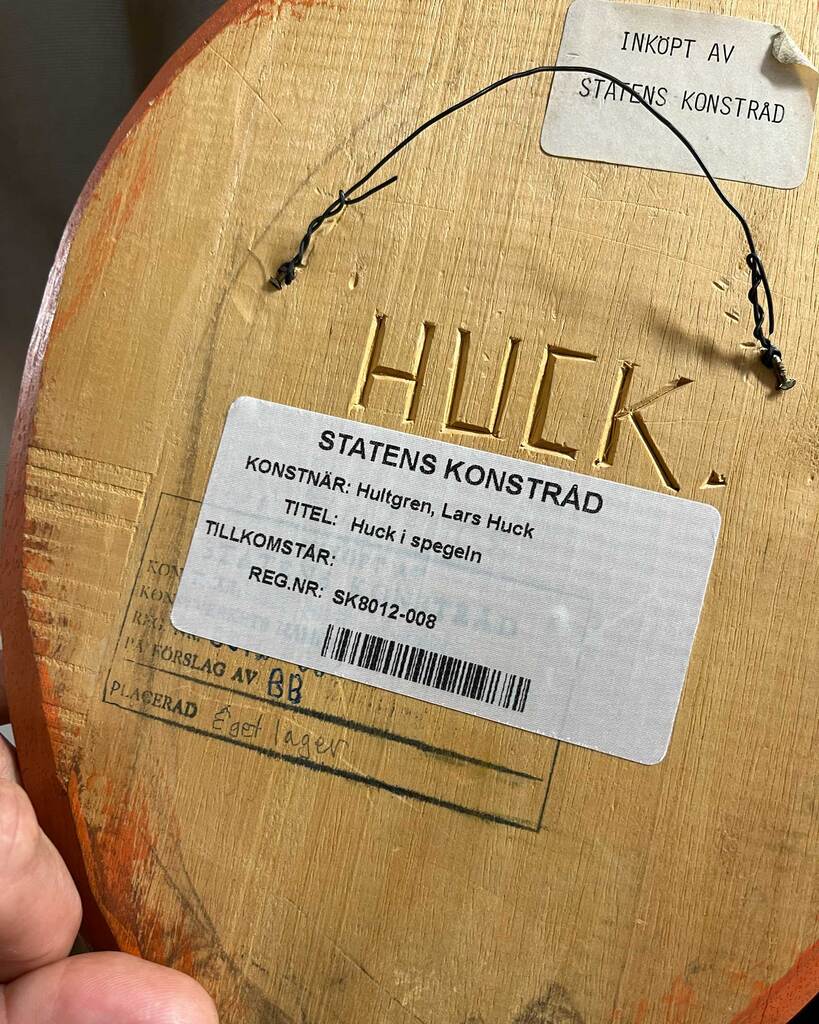
Looking at the labels attached to artworks in storage made this system visible.
Each object carried identification numbers, acquisition records, and tracking information.
The collection functions not only through physical storage but also through meticulous documentation.
Without that infrastructure, a collection of thousands of works distributed across an entire country would quickly become impossible to manage.
The Hidden Diplomacy of Public Art
One of the most valuable insights from the visit concerned the role of the art consultant.
Many artists imagine acquisitions as purely aesthetic decisions.
The reality is more complex.
Public art involves people.
Lots of people.
An artwork may be admired by a curator and still encounter resistance from an institution.
A school principal may have concerns.
A hospital administrator may have different priorities.
A government office may be cautious about politically charged imagery.
An art consultant therefore becomes a translator.
Part curator.
Part diplomat.
Part advocate.
Magnus described how relationships matter.
Conversation matters.
Trust matters.
The consultant often works to create understanding between artists and institutions.
The process is not necessarily about censorship.
More often it is about context.
An artwork that works brilliantly in one environment may not function the same way in another.
Public art requires negotiation.
Not compromise in the negative sense.
Rather, an understanding of the communities and institutions that will live with the work.
This human dimension is rarely discussed, yet it may be one of the most important aspects of public art practice.
Supporting Living Artists
One of the most important lessons I learned concerns acquisitions.
Statens konstråd does not operate like a traditional museum collecting historical masterpieces.
Its acquisition strategy focuses on living artists.
That distinction matters.
When a museum acquires work by a deceased artist, the purchase often benefits collectors, galleries, estates, or heirs.
When a public collection acquires work directly from a living artist, the impact is immediate.
The artist receives income.
The artist gains visibility.
The artist gains institutional recognition.
The artist can continue working.
In this sense, acquisitions become more than collecting.
They become cultural policy.
They become a mechanism for supporting artistic production.
The agency also focuses on artists who have a meaningful connection to Sweden.
This creates a collection that reflects the artistic life of the country while supporting the people actively contributing to it.
The Pandemic and Public Support
Magnus also spoke about the extraordinary period of the COVID-19 pandemic.
Like artists everywhere, Swedish artists faced cancelled exhibitions, postponed projects, and lost income.
In response, the Swedish government allocated additional funds for art acquisitions.
The exact figure should be verified through official sources, but the principle itself is significant.
The government used acquisitions as a way to support artists during a period of severe economic uncertainty.
This reveals something fundamental about how art is understood within the Swedish public system.
Art is not treated solely as a luxury.
Nor is it viewed solely as heritage.
It is recognised as a living sector that requires support in order to survive.
Acquisitions become both cultural investments and economic interventions.
The collection grows.
Artists receive support.
The public benefits.
A Meeting Between Two Cultures
Another interesting development emerged during our discussion.
Moderna Museet is becoming more closely integrated with Statens konstråd.
This raises fascinating questions about the future.
Historically, the two institutions have embodied somewhat different priorities.
The museum tradition emphasises conservation.
The public collection tradition emphasises circulation.
One seeks to preserve.
The other seeks to distribute.
One protects objects.
The other puts them into public life.
These approaches are not mutually exclusive.
In fact, they may strengthen one another.
Museum conservators bring specialised expertise in preservation, condition reporting, and preventive care.
Public collection specialists bring expertise in accessibility, circulation, and public engagement.
Together they may create a more balanced model.
One that protects artworks while ensuring they remain visible.
One that preserves cultural heritage without hiding it away.
What Artists Can Learn?
For artists, there are several important lessons hidden within this system.
First, public collections are built by people.
Relationships matter.
Professionalism matters.
Trust matters.
Second, acquisition is not only about artistic quality.
It is also about context.
Can the work function within public life?
Can it engage diverse audiences?
Can it exist within institutions?
Third, documentation matters.
The paperwork surrounding an artwork is often nearly as important as the object itself.
Fourth, public collections operate according to missions that differ from those of museums, galleries, and private collectors.
Understanding those missions can help artists navigate the system more effectively.
Finally, public collections are not abstract entities.
They are living networks of people, spaces, databases, logistics, conversations, and decisions.
Looking Behind the Curtain
What I expected from this visit was a tour of a storage facility.
What I found instead was an insight into an entire ecosystem.
Behind every artwork hanging in a public building lies an invisible infrastructure.
Consultants.
Registrars.
Custodians.
Conservators.
Database managers.
Transportation specialists.
Administrators.
Government agencies.
And, of course, artists.
The public usually encounters only the final result.
A painting on a wall.
A sculpture in a courtyard.
A textile in a university building.
Yet behind each object lies a chain of decisions and relationships that made its presence possible.
Walking through the storage aisles with Magnus Mattsson offered a rare glimpse into that hidden world.
It revealed that public art is not simply about collecting objects.
It is about creating connections between artists, institutions, and citizens.
It is about ensuring that art remains part of everyday life.
And perhaps most importantly, it is about recognising that a public collection is not truly alive when it sits in storage.
It is alive when people encounter it.