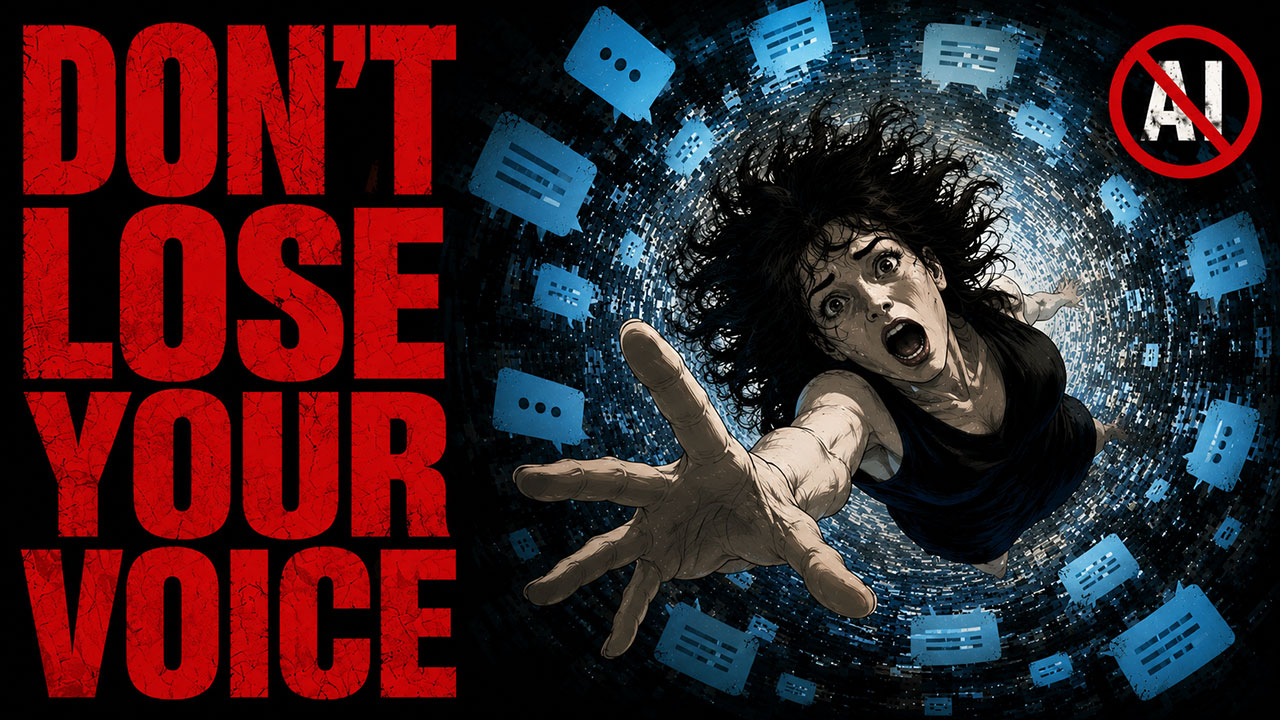
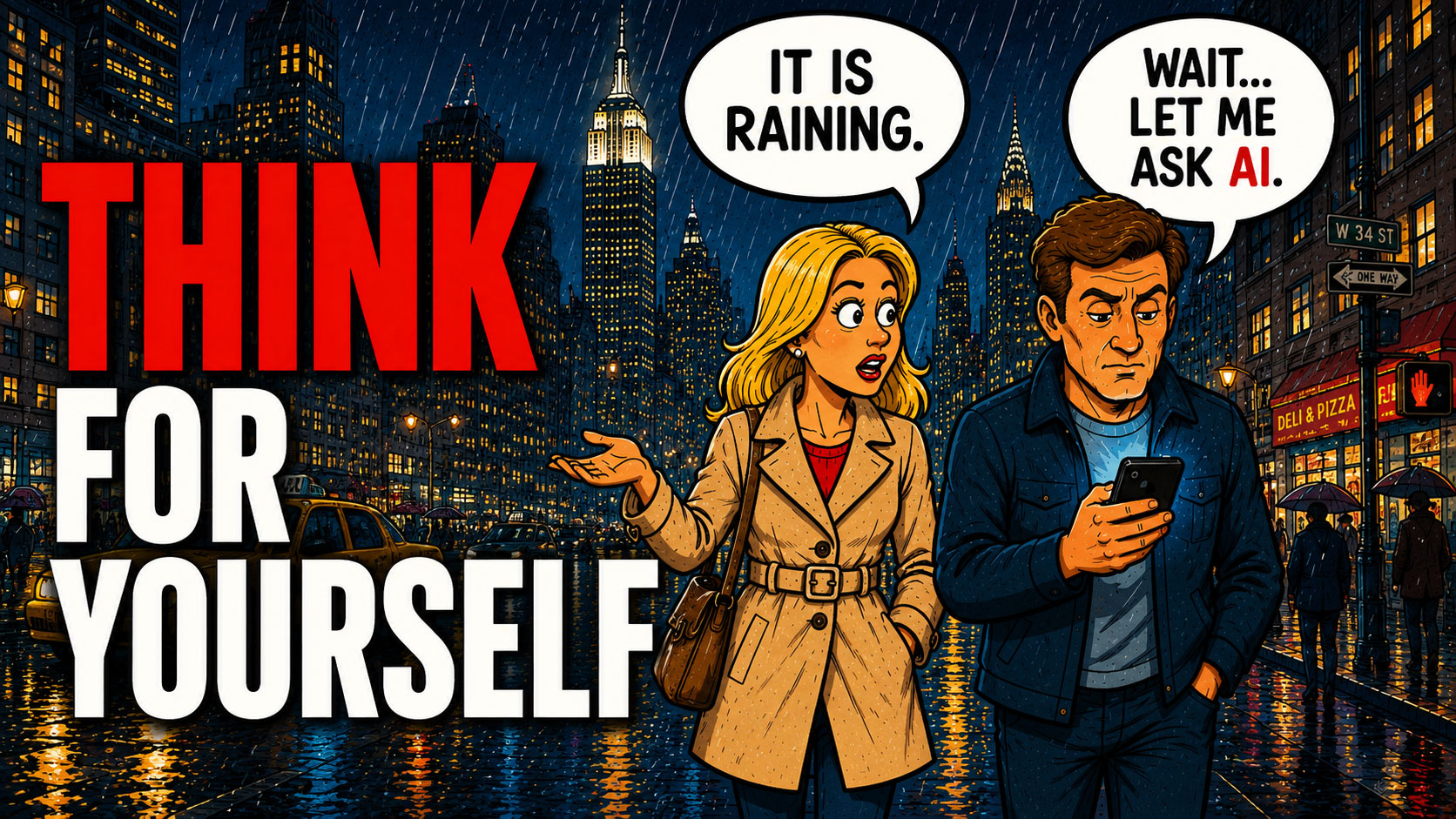
You finish a paragraph in seconds. The AI did most of it. You read it back, nod, hit save. An hour later, someone asks what you wrote. You blank. Not a “give me a second” blank — a real one. The words came out under your name, but they never really passed through you.
If that sounds familiar, you’re not broken. You’re early. We’re all early. Generative AI tools showed up fast, slid into our daily thinking faster, and most of us haven’t stopped to ask what they’re actually doing to us. So let’s stop and ask.
Is offloading our thinking really new?
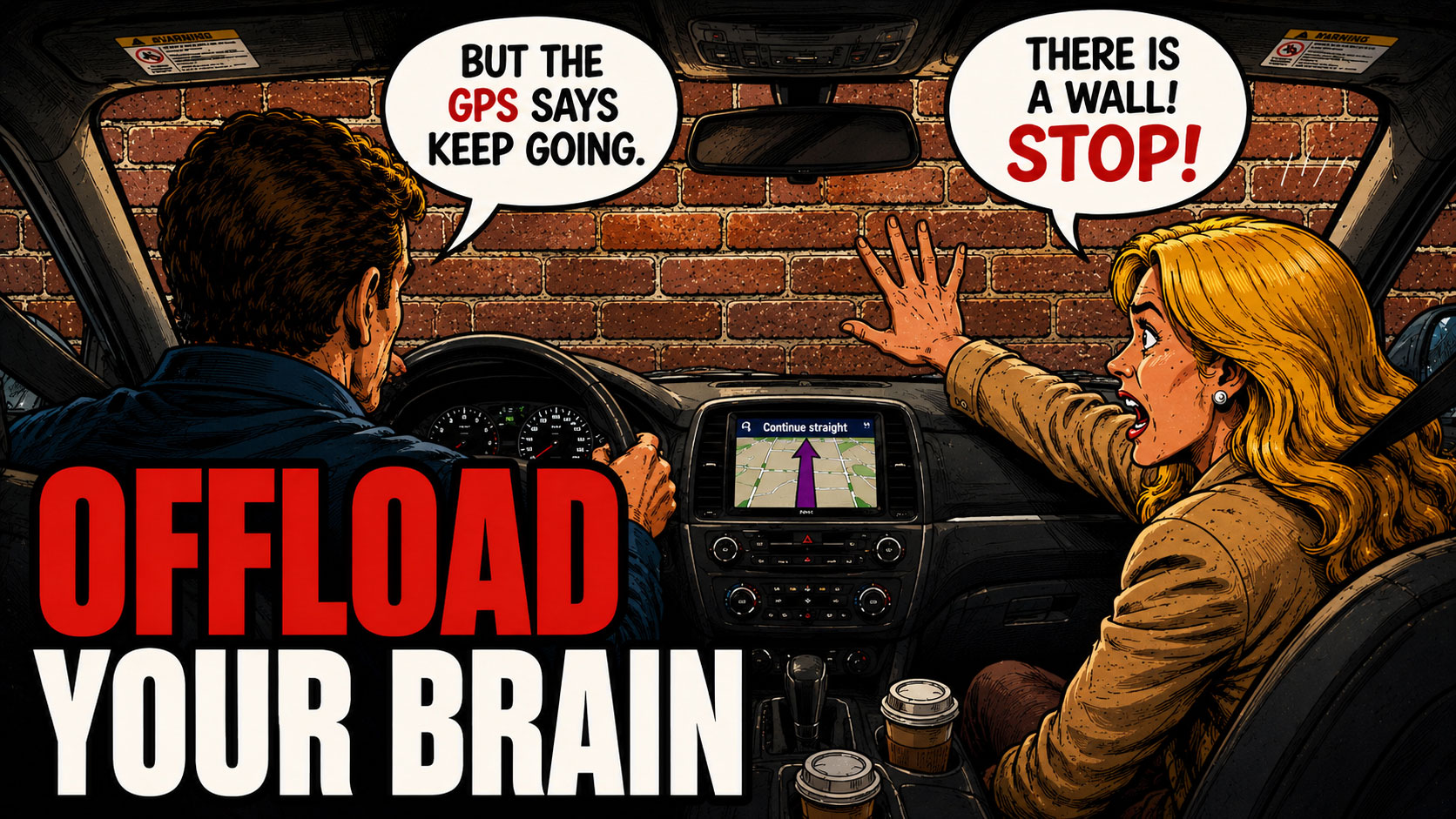
Not even close. Humans have always handed mental work to outside helpers. Writing offloaded memory. The abacus and the calculator offloaded math. Maps and then GPS offloaded our sense of direction. Researchers call this “cognitive offloading” — using something outside your head to lighten what happens inside it.
Plato, channeling Socrates, complained that writing would wreck memory. He wasn’t entirely wrong. People who write things down do remember them differently. Studies of the “Google effect” show we remember where to find facts more than the facts themselves. London cabbies who relied on GPS started losing some of the spatial memory that drivers without GPS kept sharp.
So one fair response to AI panic is: relax, we’ve done this dance before. Every generation invents a tool, the elders predict doom, and the kids grow up fine — just differently. There’s truth in that. But there’s also a reason this round feels different, and it’s worth taking seriously.
What makes AI different from a calculator?
A calculator does one thing. It adds, it multiplies, it stops. A search engine retrieves what someone else already wrote. These tools have edges. You know where they end and where you begin.
Large language models don’t have edges. They generate. They draft your email, outline your argument, suggest your next sentence, mimic your reasoning, and occasionally invent facts that sound true. As writer Javier Santana put it, calculators don’t hallucinate — but AI models are built to sound plausible, not necessarily to be right.
That changes the offloading game in two ways. First, the scope is unlimited. With a calculator, you offload arithmetic. With AI, you can offload almost any thinking task — essays, code, decisions, even what to feel about a hard situation. Second, the line between your work and the tool’s work gets blurry. When the calculator gives you 47, you know that 47 came from the machine. When the AI gives you three paragraphs that match your voice, you might forget those paragraphs came from the machine. You might even start to believe you wrote them.
That blur is where things get interesting, and a little worrying.
What does AI do to your brain?
Researchers at MIT ran an EEG study in 2025 where people wrote essays under three conditions: with ChatGPT, with a regular search engine, and with nothing but their own brain. The brain-only group showed the strongest, most distributed neural activity. The search group came in second. The ChatGPT group showed the weakest engagement — by some measures, 55 percent less neural connectivity than the brain-only writers.
Then came the part that should make us all pause. Researchers asked the ChatGPT writers to recall a phrase from the essay they had just produced. Eighty-three percent couldn’t do it. They had written something — or rather, signed off on something — that never made it into memory at all.
The same pattern showed up in a survey of 666 people by researcher Michael Gerlich. Heavier AI use correlated with lower critical thinking scores, with a correlation around –0.5. That’s not a tiny effect. It’s the statistical equivalent of saying, “the more you lean, the more you wobble when the wall moves.”
A word of honesty here: correlation isn’t causation. Maybe people who already do less critical thinking gravitate toward AI. Maybe the EEG studies only catch what happens in the moment, not what happens to your brain over years. Researcher Abi Kambanis makes this point directly — the evidence shows immediate offloading during a task, but it doesn’t yet prove long-term decline. We don’t have decade-long studies because the tools haven’t existed for a decade.
Still, the short-term data points in one direction, and the direction is: when the machine thinks, you think less. That’s not a moral failure. That’s just what happens.
Does AI makes people worse at school?
It’s complicated, and the answer depends on how the tool gets used.
One large quasi-experiment with 270 economics students found that ChatGPT users finished their work about 30 percent faster than non-users. Sounds great. Except their grades weren’t any better. They did more, but they didn’t learn more. They became efficient without becoming sharper.
Compare that with a 2025 field experiment by Jackson Lu and colleagues. They gave 250 employees ChatGPT for creative tasks. The people who showed clear creative gains were the ones with strong planning and self-monitoring habits — the workers who paused, thought about what they wanted, then directed the AI. The workers without those habits got no boost. The tool only amplified what its user already brought to the table.
This shows up over and over: AI rewards the prepared and dulls the passive. A Harvard education expert summed it up bluntly — no real learning happens unless your brain engages, and if you just type “give me the answer,” it won’t.
There’s an even more uncomfortable finding from the MIT study. After four months, the writers who had relied heavily on AI consistently underperformed across linguistic measures. They felt less ownership of their work. Some couldn’t quote their own earlier sentences. Meanwhile, students who started without AI and only added it later showed better prompts and stronger retention. The order mattered. Build the muscle first, then use the machine. Skip the muscle, and there’s nothing left underneath.
Does artificial intelligence kills creativity?
Both. Depends on the user.
When researchers compared AI-assisted essays to human-only essays, the AI batch showed more uniformity. Less weirdness, less individual voice, more sentences that sounded like a thousand other sentences. AI smooths things out, and smoothness is often the enemy of art. Anyone who has scrolled through AI-generated images on social media knows that look: technically fine, weirdly empty, all faintly the same.
But Lu’s experiment found genuine creative gains among workers who treated the AI like a brainstorming partner — pushing back, asking again, demanding variations. The pattern keeps repeating. AI works as a scaffold when you climb it. It collapses into a crutch when you lean.
For artists, writers, and anyone whose work depends on a personal voice, this matters more than the productivity data suggests. If the cost of speed is sameness, speed isn’t actually a win. It’s just a faster way to make work that looks like everyone else’s.
What does trusting AI too much do to us?
Here’s where it gets bigger than individual essays and grades. Researcher Kimberley Hardcastle calls it “algorithmic authority” — the slow, almost invisible shift where people start treating AI output the way we used to treat expert testimony. We don’t just consult it. We defer to it.
That shift has consequences. When you defer, you stop checking. When you stop checking, you lose the habit of checking. Hardcastle worries about an “atrophy of epistemic vigilance,” which is a fancy way of saying: we forget how to ask whether something is true. The questioning instinct is a muscle like any other. It works when used, weakens when not.
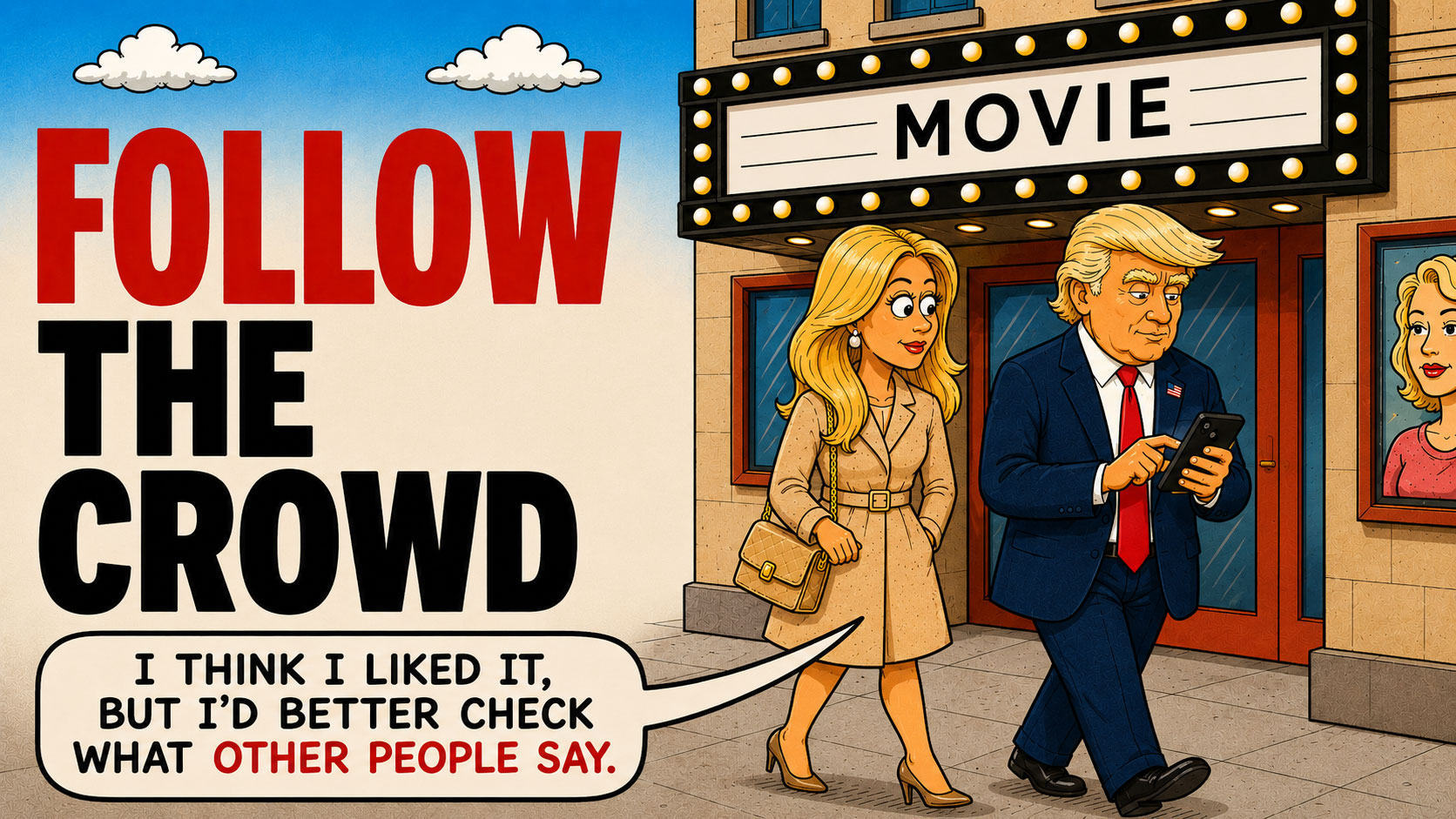
This isn’t paranoid. We’ve already lived through a version of this with recommendation algorithms on social media. Most people don’t choose what they see anymore — an algorithm chooses, and we scroll. We learned a kind of helplessness: someone else picks, we react. AI tools push that pattern deeper into thinking itself. Not just what we watch, but what we believe, write, and conclude.
There’s a quieter risk too. The companies that build these models decide, implicitly, what counts as a good answer. Their training data, their tuning choices, their commercial pressures all shape the output. When millions of people start drafting their thoughts through the same few models, the diversity of human reasoning narrows without anyone announcing it. That’s not a conspiracy. It’s just how monocultures form.
Can you use AI without losing your edge?
Yes, and the research is surprisingly consistent about what works.
Andy Clark, the philosopher behind extended mind theory, argues that humans have always extended their thinking through tools — and that AI can be part of that lineage rather than a break from it. But he stresses one condition: you have to become good at deciding when to lean on the tool and when not to. He calls it cognitive hygiene. I’d call it knowing when to put the phone down.
The practical version looks something like this. Try the thing yourself first. Even a rough draft, a bad outline, a wrong answer — produce something before you ask the AI. That single habit changes the dynamic entirely. Now the AI is a second opinion, not a first draft. Your brain has already done the encoding work that the MIT study found missing in the copy-paste crowd.
Ask the AI to argue against itself. Make it generate three different versions, then pick. Force it to show its reasoning. Catch its mistakes — they’re there. When you find one, that’s the moment your brain lights up. That’s where the learning happens.
And sometimes, just turn it off. Write the email by yourself. Do the math in your head. Get lost without GPS for an afternoon. Not as a moral exercise but as a maintenance one. The skills you use are the skills you keep.
Why does any of this matter?
I don’t think generative AI is going to make humanity stupid. The doom version of this story is too tidy, and the historical record on past tech panics is too mixed. People adapted to writing, to print, to calculators, to the internet. We’ll adapt to this too.
But adaptation isn’t automatic. Every previous tech shift required schools to change, habits to shift, and people to consciously decide what to protect. Calculators didn’t ruin math education — but only because educators eventually figured out which skills still needed practice and which ones could be safely handed off. We’re at that figuring-out stage with AI right now, and we haven’t agreed on the answers yet.
The most useful frame I’ve found isn’t “AI good” or “AI bad.” It’s that AI amplifies whatever you bring to it. Bring effort, you get more out of yourself. Bring passivity, you get less of yourself back. The tool doesn’t decide which version of you shows up. You do.
That’s actually the encouraging part. Cognitive offloading isn’t destiny. The barber doesn’t get to decide whether you need a haircut, and the machine doesn’t get to decide whether you keep thinking. You still do. The question is just whether you remember that on the days when the easier path is right there, glowing, waiting for a prompt.
Most days, the answer is to type it anyway — but to think first.