The invisible force that shapes what you buy, believe, and become
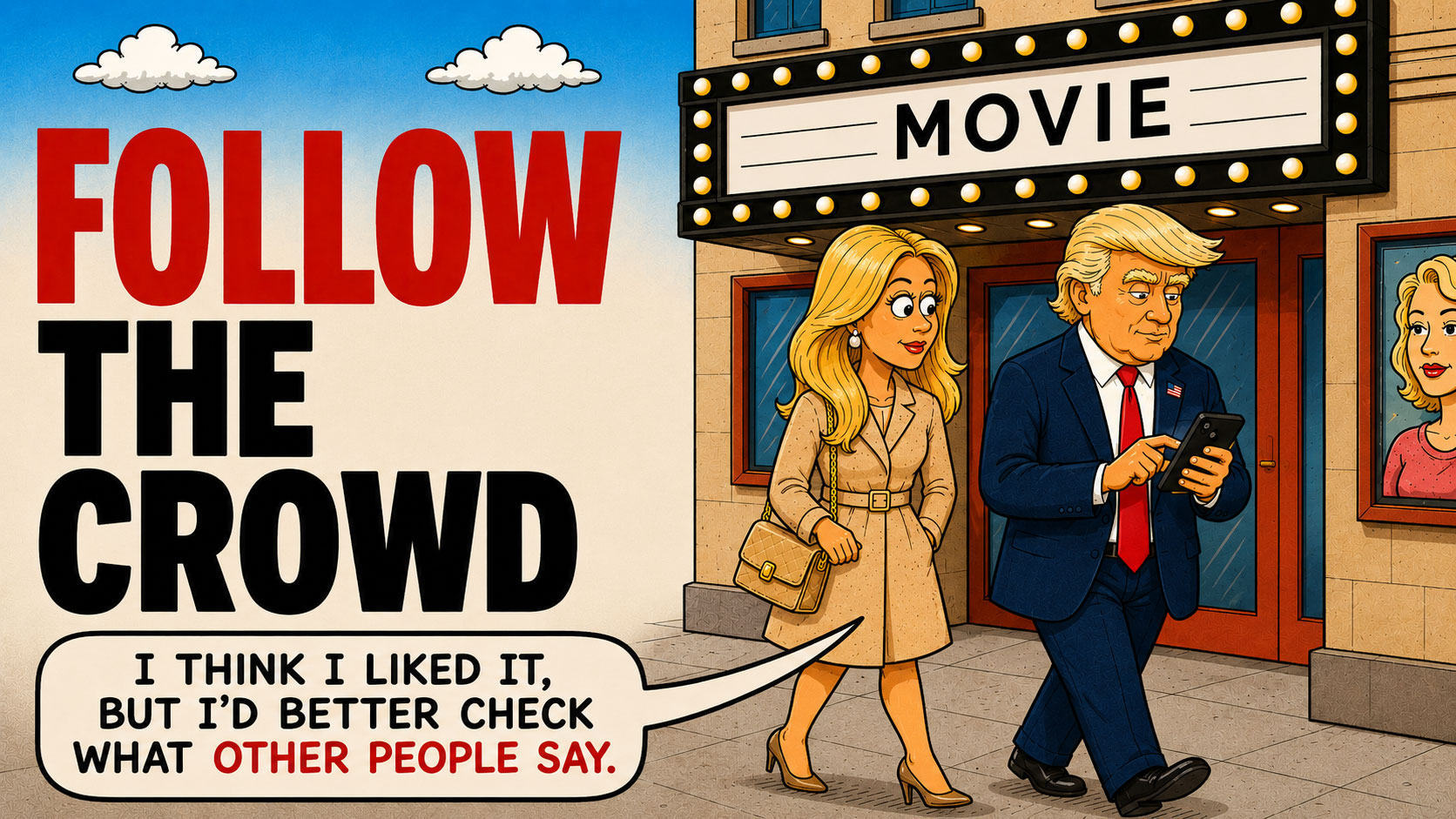
You’re scrolling through a restaurant app. Two options are side by side. Same cuisine, similar prices, similar distance from you.
One has 47 reviews. The other has 4,300.
You pick the second one. Of course you do. You didn’t even really think about it.
That instinct is one of the most powerful forces in human behavior. Psychologists call it social proof. The rest of us call it common sense. And the people who understand it best are quietly using it to shape almost every decision you make.
What Social Proof Actually Is
Here’s the short version: when you’re unsure what to do, you look at what everyone else is doing.
That’s it. No jargon required.
You walk into a city you’ve never visited and need to find dinner. You pass two restaurants. One is full. One is empty. You go to the full one. You have no other information — no reviews, no recommendations, no context. Just the behavior of strangers. And that’s enough.
This isn’t irrationality. It’s a genuinely smart shortcut. Other people’s choices carry real information. If thousands of people have bought something, read something, eaten somewhere, there’s a reasonable chance it’s worth your time too. As Robert Cialdini writes in Influence, “We will make fewer mistakes by acting in accord with social evidence than contrary to it.”
The problem is that this shortcut has an off switch you can’t always control. And some people know exactly where it is.
Fake Signals, Real Results
Everyone hates canned laughter.
Ask anyone — they’ll tell you it’s fake, condescending, and insulting to their intelligence. And yet television executives have used it for decades, over the objections of directors, writers, and actors who despise it. Why?
Because the research is unambiguous: canned laughter makes audiences laugh more, laugh longer, and rate the material as funnier — even when the jokes are bad. Especially when the jokes are bad.
The sound of other people laughing — even people you know don’t exist, even a sound you consciously recognize as artificial — still nudges your brain toward the conclusion that something is funny. You know it’s fake. It works anyway.
This is social proof at its most raw. It doesn’t require belief. It doesn’t even require plausibility. It just requires the signal. A behavioral whisper that says: other people responded here. And your brain, running its ancient software, responds in kind.
From YouTube to Amazon, the Pattern Is Everywhere
Once you see it, you can’t unsee it.
The “bestseller” label on a book. The follower count before you decide whether an account is worth following. The number of likes visible before you’ve formed your own opinion. The queue outside a new restaurant that exists partly because the owner knows a queue creates a queue. These are all laugh tracks in different clothes.
On YouTube, a video with 4 million views feels more credible than the same information delivered by someone with 400 subscribers — regardless of who actually knows more. On Spotify, a song that lands on a popular playlist gets more plays because it’s already getting plays. On Amazon, a product with 12,000 reviews at 4.2 stars will outsell a product with 200 reviews at 4.8 stars, even though the math says the opposite should be true.
Algorithms have made this ancient reflex into an industrial process. Virality isn’t just a feature of social media — it’s the whole product. The metric of what other people engaged with becomes the criterion for what you should engage with. The platform isn’t showing you what’s best. It’s showing you what has the most social proof, which tends to generate more social proof, which tends to feel like proof of quality, which tends to generate more engagement.
Round and round.
In the art world, this plays out with particular vividness. An artist represented by a prominent gallery suddenly becomes more interesting to collectors who ignored them before. Not because the work changed — because the social signal did. Prices rise not because more people looked carefully and reached independent conclusions, but because the rising price itself becomes the signal. In art, in fashion, in finance, the crowd’s behavior gets mistaken for collective wisdom.
The Wisdom of Crowds (And Its Limits)
Think about what it would mean to start from scratch on every decision.
You’d have to independently evaluate every restaurant, every product, every belief, every behavior. You’d be paralyzed before noon. The brain evolved to outsource where it can — and other people’s choices are a cheap, fast, and often reliable source of information.
This shortcut is most powerful in two conditions. The first is uncertainty. The less you know, the more you rely on what others seem to know. This is why social proof explodes in new situations — moving to a new city, trying a new technology, navigating a new social environment. When the map is blank, other people’s footprints become the map.
The second condition is similarity. You copy people who seem like you. This is why influencer marketing works so specifically. Not celebrities in the abstract — influencers who feel like a slightly more aspirational version of you. Someone who shares your aesthetic, your sense of humor, your approximate income bracket. Their choices feel less like a celebrity endorsement and more like advice from a friend who figured something out first.
Social proof + similarity + uncertainty = one of the most reliable triggers in consumer psychology. Every marketing department knows this equation.
When Trusting the Crowd Is Smart
It would be easy to make this entirely cynical, but that would be wrong.
Social proof is also how good things spread.
A first-generation college student who doesn’t know anyone who has navigated graduate school applications leans heavily on communities of peers who share what worked for them. That’s social proof doing genuine good — reducing anxiety, democratizing information, helping people navigate unfamiliar terrain.
Public health campaigns have used it for decades. “Most students at this university drink fewer than four drinks a week” performs better than fear-based messaging, because it corrects the distorted impression people have of what’s normal. If you think everyone around you is doing something reckless, and they’re actually not, showing you the real data changes behavior. Accurate social proof can be a genuinely powerful corrective.
Safety behaviors, environmental commitments, charitable giving — research consistently shows that telling people what their neighbors actually do (“76% of people on your street have already reduced their energy use”) is more effective than telling them what they should do. The pull toward group norms runs deeper than moral argument.
Is Social Proof Weaponized?
Here’s the darker side, and it’s worth looking at squarely.
Tip jars seeded with a few bills before a shift begins. Church collection plates salted with early donations. Nightclubs that deliberately maintain a line outside while the space inside is half empty. These are small examples of a very large pattern: the deliberate manufacture of social proof to influence behavior.
Scale that up.
Follower counts can be bought. Review scores can be gamed. “Viral” moments can be engineered through coordinated sharing networks. Bestseller lists have been gamed by bulk purchases. “Trending” topics on social platforms can be driven by bots. The entire infrastructure of visible popularity — the thing your brain treats as evidence of value — can be fabricated.
Financial markets may be the most dramatic example. The history of speculative bubbles is largely a history of social proof gone haywire. When enough people buy an asset because other people are buying it, the price rises, which attracts more people who see the rising price as evidence of value. The behavior generates the signal which attracts more behavior. This continues until it doesn’t. Then everyone discovers they were following each other in a circle.
The startup world runs a version of this too. Valuations that don’t reflect earnings but reflect other investors’ confidence. “Traction” measured by user numbers that were often bought cheap. A company can be worth a billion dollars not because it has built something worth that but because enough credible people have agreed to behave as if it is.
Are You Noticing the Patterns?
The hardest thing about social proof is that it doesn’t announce itself. You don’t think “I am now being influenced by the behavior of others.” You just feel a pull toward something, and it feels like your own preference.
A few signals worth learning to recognize:
You’re drawn to something primarily because it’s popular. Not because you’ve evaluated it, but because the number is large, the line is long, the follower count is high. Popularity and quality overlap, but they’re not the same thing. One is evidence. The other is a signal that something might be worth investigating.
You feel social anxiety about a choice that has nothing to do with other people. Feeling anxious about reading a book nobody else is reading. Wearing something out of fashion. Holding a minority opinion in a group. That anxiety is social proof operating on your sense of self-identity, not just your consumer choices.
You’ve changed your view after learning about consensus, not after learning new facts. “Most people think X” is not evidence for X. Majorities have been wrong, persistently, about important things throughout history. If consensus alone shifted your view, you were responding to social proof, not argument.
You feel urgency you can’t quite explain. Fear of missing out is often social proof in disguise. The sense that everyone is already doing or owning or experiencing something — and that you’re falling behind — is manufactured more often than it’s organic.
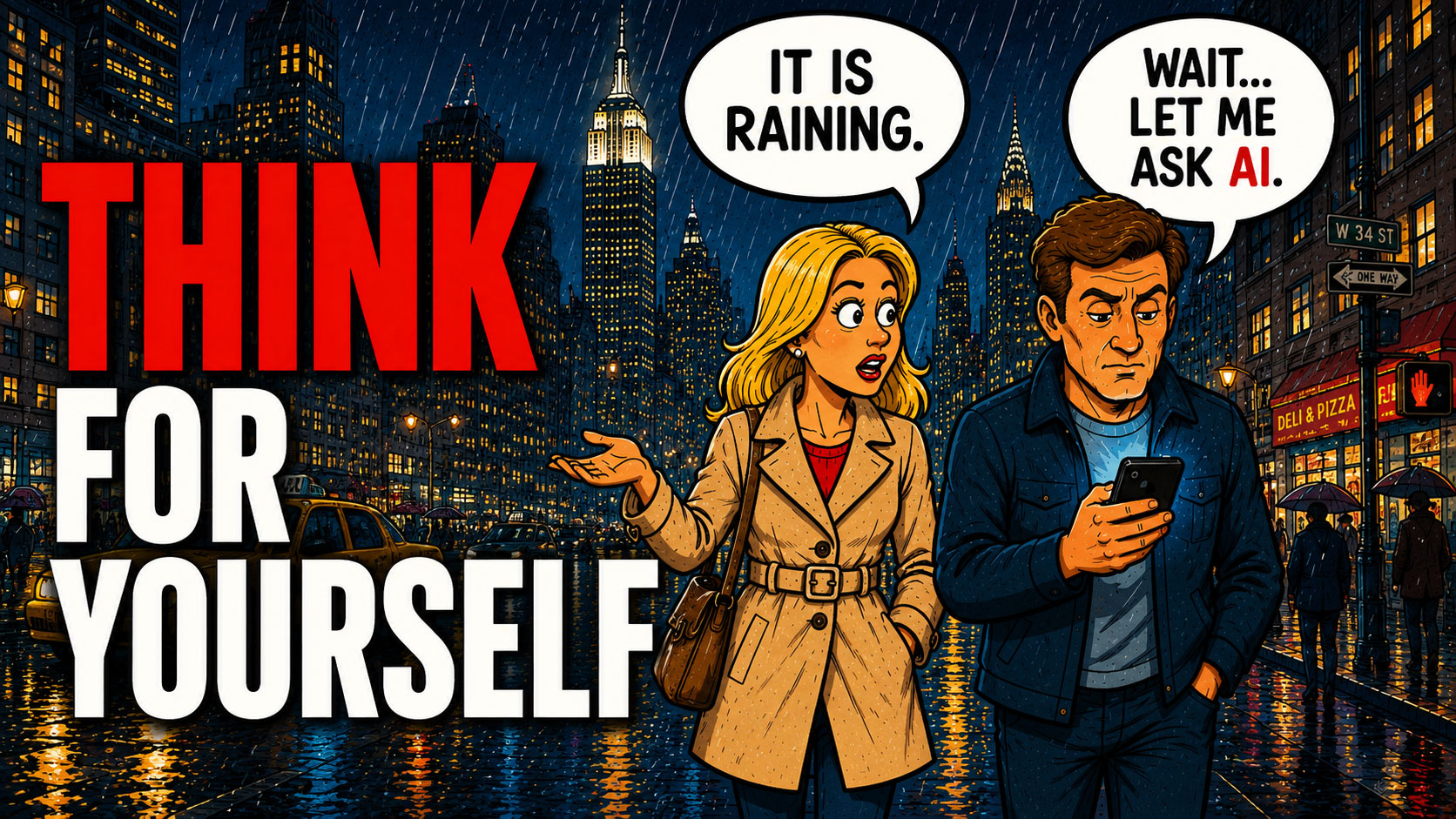
Think for Yourself. But Not Like That.
The goal isn’t to distrust every popular thing. That would make you contrarian rather than independent — and contrarianism is just social proof in reverse, where you take your cues from the crowd and then do the opposite. Same mechanism, different output.
The goal is to stay conscious of the shortcut while you’re using it.
A few practices that actually help:
Ask what you actually know about this versus what you’ve absorbed from signals. With a restaurant: have you read a review that addressed what you care about? With a product: do the reviews describe specific use cases or are they generic praise? Separate actual information from the halo of popularity.
Seek out friction before important decisions. Before buying something expensive, before accepting a widely held view, before joining a movement — look for the critics. Not to be persuaded by them automatically, but to make sure you’ve heard the case against. The crowd tends to amplify what agrees with it and suppress what doesn’t.
Notice who benefits from the social proof signal you’re receiving. A restaurant review platform has interests. An algorithm has interests. An influencer who gets paid per conversion has interests. The crowd’s behavior can be authentic or it can be assembled. Asking who wins when you follow the signal is a useful filter.
Use social proof consciously as a starting point, not an endpoint. “Many people like this” is a reasonable reason to investigate something further. It is not a reason to stop investigating.
Social Proof Is Not Going Anywhere
You will never be able to fully step outside social proof. Neither will anyone else. It runs too deep, was too useful for too long, and shapes too much of what feels like individual preference for any of us to opt out entirely.
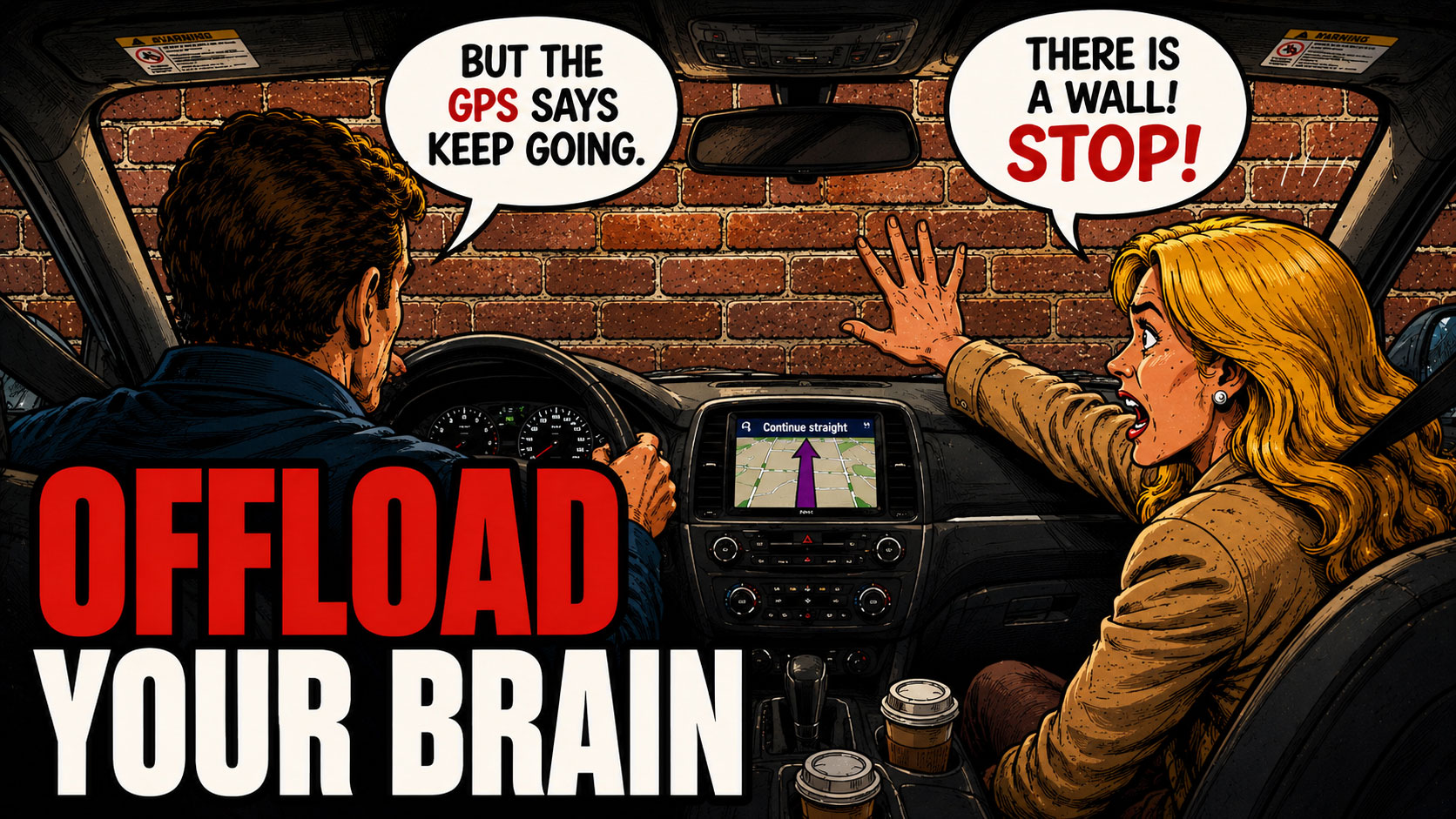
But there’s a meaningful difference between being influenced by the crowd and being run by it. Between using other people’s choices as information and outsourcing your judgment to the nearest consensus.
The laugh track still works on you. It works on all of us. But at least now, when you notice yourself laughing, you can pause for half a second and ask: Is this actually funny? Or is it just that everyone else seems to think so?
Sometimes the answer will be: it’s both. The crowd got it right.
Sometimes you’ll find that what you took for humor was just noise. And the joke was on you.
Adapted from ideas explored in Robert Cialdini’s Influence: The Psychology of Persuasion (1984). All examples, framings, and reflections are original.