Why a Grant Rejection Hurts So Much
If you just got the email, let me say this plainly: do not turn one rejection into a verdict on your practice. I know that is easier said than done. You gave time, hope, unpaid labor, and probably a ridiculous amount of emotional energy to that application. So yes, it hurts. And being kind to yourself here is not weakness or laziness. Research on self-compassion shows the opposite: responding to yourself with care during difficult moments is associated with more adaptive coping and stronger self-improvement, not less.
It also helps to remember what kind of arena you are in. In Creative Australia’s Arts Projects round closing on March 3, 2026, there were 2,307 eligible applications and a 12% success rate. Creative Capital says it has received thousands of proposals each year since 2020, and its 2027 open call aims to support approximately 50 new works. In other words, a rejection can easily happen inside a brutally selective process, even when the idea is real and the work is strong.
The first thing to do after a grant rejection is not “fix your career.” It is to stop the spiral. Take the night. Take the weekend if you need it. Do not immediately rewrite your artist statement in a state of humiliation. Your goal right now is simple: get enough distance that you can look at the result as information instead of autobiography. That shift matters, because the next move you make is either going to sharpen your strategy or deepen your exhaustion.

Read the Rejection Like an Editor
Once the sting drops a little, read the rejection carefully. Not dramatically. Literally. You are trying to identify what kind of “no” you got. Canada Council distinguishes between applications that are ineligible and those that are unsuccessful after committee assessment. In its updated portal guidance, “Closed – Ineligible” means the application did not meet the rules for the grant or prize, while “Closed – Unsuccessful” means it was assessed by a committee but not selected for funding. That is a big difference, and it changes everything about your next step.
If your application was ineligible, your first job is not to improve the art. It is to fix compliance: eligibility, missing material, wrong budget format, wrong dates, wrong amount, incomplete support items, or a submission problem. Funders are often blunt about this. The NEA states that late, ineligible, and incomplete applications will not be reviewed, and missing required items or work samples can make an application ineligible. Canada Council similarly notes that ineligible applicants receive a reason explaining why.
If your application was unsuccessful rather than ineligible, save everything: the email, the scores, the comments, the guideline version, the budget, the support material list, and the final text you submitted. Write a short debrief while the details are fresh: what fund you applied to, what criteria mattered most, what support material you used, and what you suspect was weakest. You are not journaling your pain here. You are building a record you can actually use when the emotional weather changes.
Ask for Feedback the Right Way
A lot of artists think the next step is automatically “ask the panel what went wrong.” Sometimes yes. Often, no. It depends entirely on the funder. Canada Council now says unsuccessful applicants receive a detailed breakdown of scores by criteria, and comments from assessors may be included if available. It also says applicants are encouraged to get in touch with questions or guidance for future applications. That is useful feedback, and you should use it.
Other funders are much thinner. Creative Australia publishes general peer feedback from recent rounds, but explicitly says it does not provide specific feedback on individual applications; instead, it directs applicants to Artists Services for discussion about future applications and other options. That means you may not get a personalized explanation, but you can still get something valuable: broad panel patterns, recurring weaknesses, fit advice, and guidance on where your project belongs next.
And then there are funders who simply cannot do individual feedback at scale. Creative Capital says that, because of the high volume of submissions, it is unable to provide feedback on individual applications. New Music USA says the same in its Organization Fund FAQ. So if the funder does not offer individualized comments, do not waste your dignity trying to force them into a private consulting session. Instead, ask a narrow, respectful question if allowed: was this primarily a fit issue, a competitiveness issue, or an eligibility/completeness issue? If that door is closed, move on and pull feedback from the sources you do have: the criteria, your scores, public peer notes, and your own submitted materials.
Review Your Application Like a Panelist
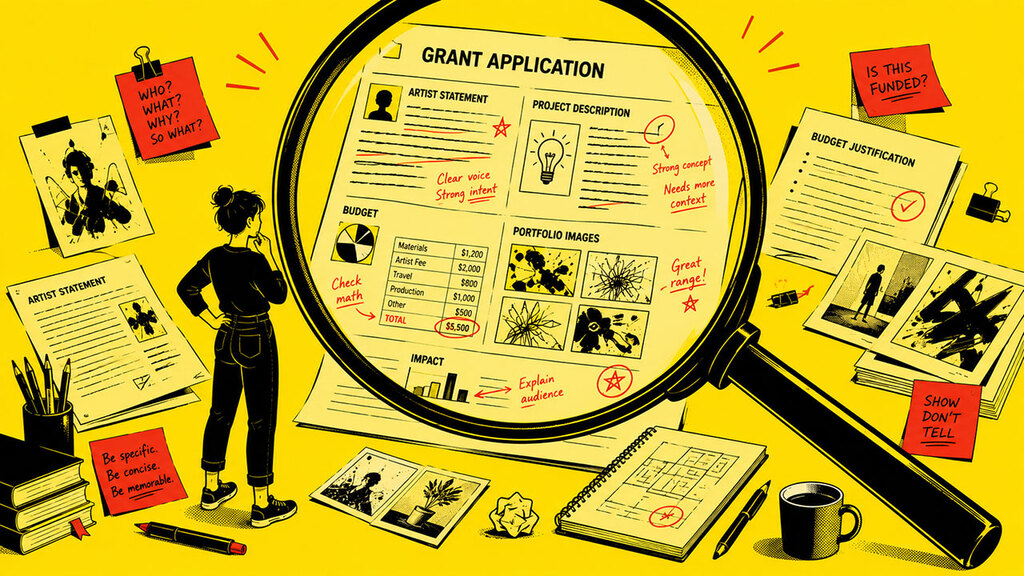
Now comes the useful part. The people reviewing your grant application are not meeting your full artistic self. They are meeting a project description, a budget, support material, and a very structured set of criteria. Creative Australia says peer assessors review and score applications against published criteria and then discuss rankings. Canada Council says peer assessors read and score grant applications against assessment criteria, and grants are determined from ranked lists generated through that process. This is why a good application is not a description of your practice in general. It is a translation device.
Clarity matters because time is limited. Creative Australia tells assessors they may review 20 to 130 applications for a panel, with roughly 15 to 30 minutes to read and score each one before meetings. Its peer feedback repeatedly reminds applicants not to assume assessors know their work, to use plain language, and to explain why this project, why now, and how it will be made. So when you review your rejected application, do it with brutal fairness: if someone encountered this proposal cold, would they immediately understand what you are making, why it matters now, how it will happen, and why you are the person to do it?
Then audit the package piece by piece. Creative Australia’s official tips say to speak in your own voice, be concise and clear, avoid jargon, describe the project in terms of “what,” “why,” and “how,” and make the budget detailed and transparent. It also says support material should corroborate the written claims, letters of support should demonstrate real backing, and links must work without logins. Recent peer feedback adds even more practical pressure points: explain budget calculations, include contingency plans if funding is unconfirmed, show confirmed partner support where possible, and use support material that is specific, relevant, and accessible. If your writing said “ambitious” but your work samples looked unresolved, or your budget said “community impact” but your letters were vague, that mismatch may have sunk you.
Decide Whether To Reapply, Revise, or Walk Away
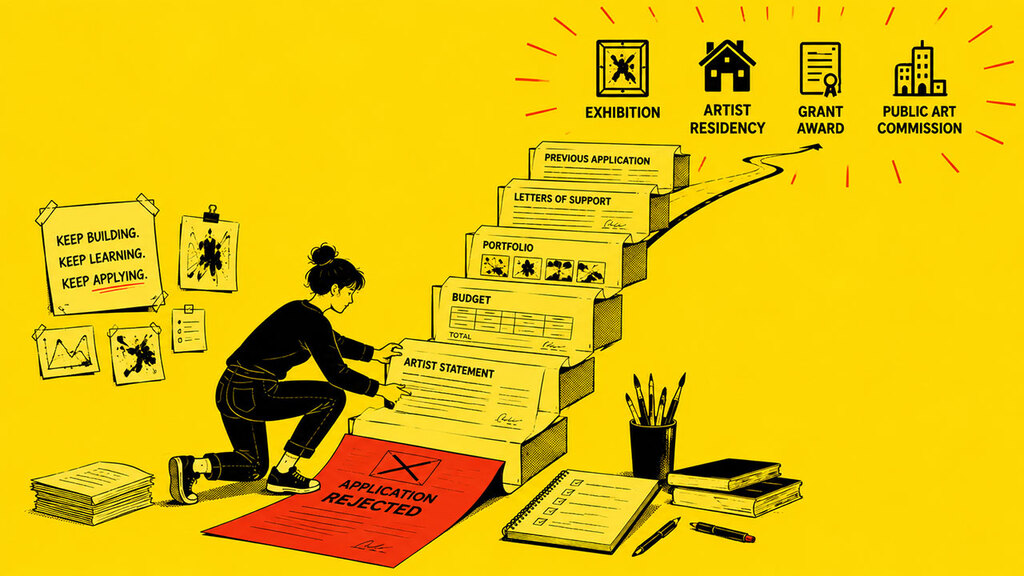
Not every rejection deserves another application to the same funder. Sometimes the right response is to reapply with a sharper package. Sometimes it is to move the project to a different program, deadline, or panel. Canada Council says you cannot re-submit the same application, but you can start a new one using the feedback you received, and you should check application limits before applying again. Creative Australia similarly advises applicants to identify the right grant carefully and check whether there are limits on how many applications can be submitted in a round.
Ask yourself three hard questions. First: was this a fit problem? Creative Australia explicitly says that when choosing an assessment panel, you should consider which group of assessors will best appreciate the work’s merits, and to contact Artists Services if you are unsure. Second: was this a viability problem? Its FAQ also notes that applications with confirmed venues or partners are often more competitive. Third: was this a packaging problem, where the idea may be solid but the writing, support material, and budget did not make the case. A future application should answer whichever of those questions exposed the real weakness.
And if you are tempted to appeal, be careful. Canada Council says its funding decisions are final unless there is evidence of a procedural error. Creative Australia’s review mechanism exists to examine whether due process was followed, not to reconsider the artistic merits of an application. Do not launch an appeal because you are hurt or because you believe the panel “just didn’t get it.” Appeal only if there is a genuine process issue: wrong information from staff, published criteria not followed, conflict issues, or other procedural concerns you can state clearly and factually.
Build a Stronger Grant Strategy After Rejection
This is the part that turns rejection into leverage. Build a system, not a mood. Start a simple rejection recovery file for each application: submitted draft, feedback, criteria, weak points, next eligible date, and revision ideas. Funders themselves keep telling applicants to prepare earlier than they think. Creative Australia says staff can help applicants understand the purpose of a grant, its requirements, and submission process, but they do not review drafts. It also says registration can take up to two business days, applications can be saved as you go, and once submitted, the application cannot be amended except for limited confirmations such as newly secured partnerships or funding. That is a strong argument for planning farther ahead and getting a second set of eyes on the draft before you hit submit.
Use the support that actually exists. Creative Australia says grant information and application forms are available in accessible formats, and it accepts sections of applications in accessible formats as well. It also accepts applications and support material in languages other than English, including Auslan. Canada Council’s Application Assistance program can cover costs for help with the application process, including general assistance, Indigenous language translation into written English or French, and sign language interpretation and translation for eligible applicants who face disability, language, geographic, or cultural barriers. If writing, access, translation, or system navigation is part of what keeps weakening your applications, do not keep pretending that is just a “personal weakness.” Build support into the next round.
And before the next deadline, do the boring, high-value work. Reread the application carefully. Ask a friend or colleague who knows your work to review the draft. Check every link. Make sure support letters are current and specific. Make sure the budget actually explains itself. Creative Australia’s own grant writing tips say all of that directly. None of it is glamorous. All of it increases the chance that the application will advocate for you when you are not in the room.
Do Not Let One Rejection Decide What Gets Your Energy
Here is the real point. A grant rejection is not just disappointment. It is evidence. It tells you something about fit, timing, criteria, clarity, support material, competition, or process. Canada Council says it is committed to helping applicants plan future applications and encourages questions or guidance. Creative Australia repeatedly points applicants back to Artists Services to discuss future applications and options. That means the best response to rejection is not disappearance. It is a cleaner next move.
Protect your energy, but do not abandon your strategy. Rest first, yes. Then convert the pain into something useful. Self-compassion is not self-excusing; the research behind it points toward better coping and more willingness to improve. That is the posture you want now. Not shame. Not grand re-invention. Just one honest next action: request the feedback, rewrite the weak section, get better support material, choose a better-fit fund, or decide that this particular opportunity is not worth another month of your life. Do not waste the rejection. Make it carry some weight for you next time.