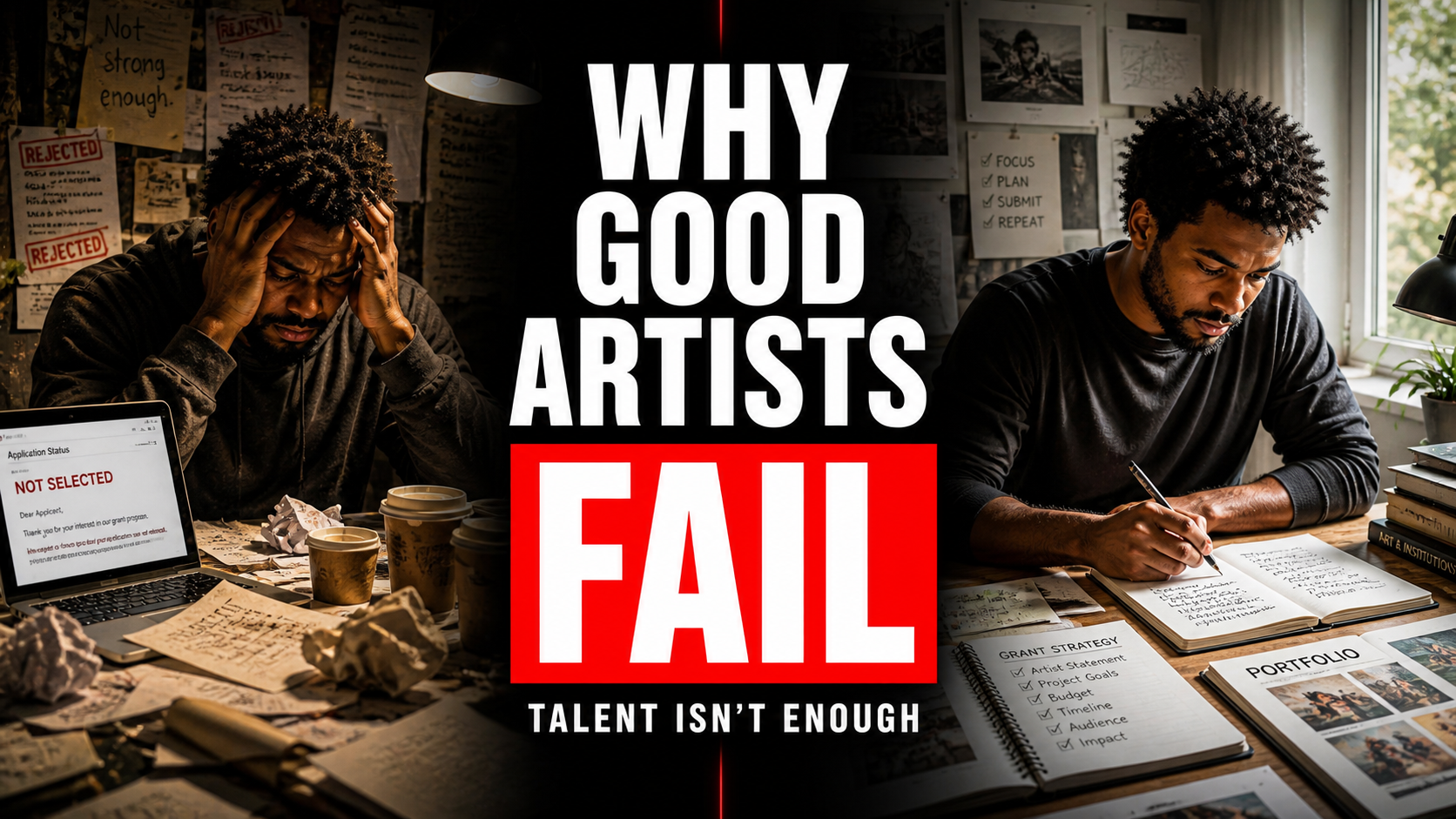
Most artists I know think of curators the way job seekers think of recruiters. There is a person with power on one side, a person who wants something on the other, and a small window in which you have to seem impressive enough to be remembered. So the artist polishes a bio, sends a careful email, hopes to be invited to coffee, and then waits. When nothing happens, they assume their work was not strong enough, or that they did not network hard enough, or that the art world is rigged.
I want to offer a different picture, because the picture above is not just demoralizing. It is also wrong. When you actually look at what the research on art worlds shows, durable artist and curator relationships do not get built through impressive first impressions. They get built through repeated collaboration under uncertainty, where both people slowly learn that the other is reliable, intelligible, and professionally generative. That is a quiet, unsexy sentence, but it changes how you spend your week.
I have been thinking about this carefully because I see artists burning enormous amounts of energy on the wrong end of this relationship. They spend months crafting cold introductions and almost no time on the things that actually create durable ties. So let me walk through what the evidence shows, what it means for how you work, and what I would do if I were starting from scratch tomorrow.
Curators are not gatekeepers
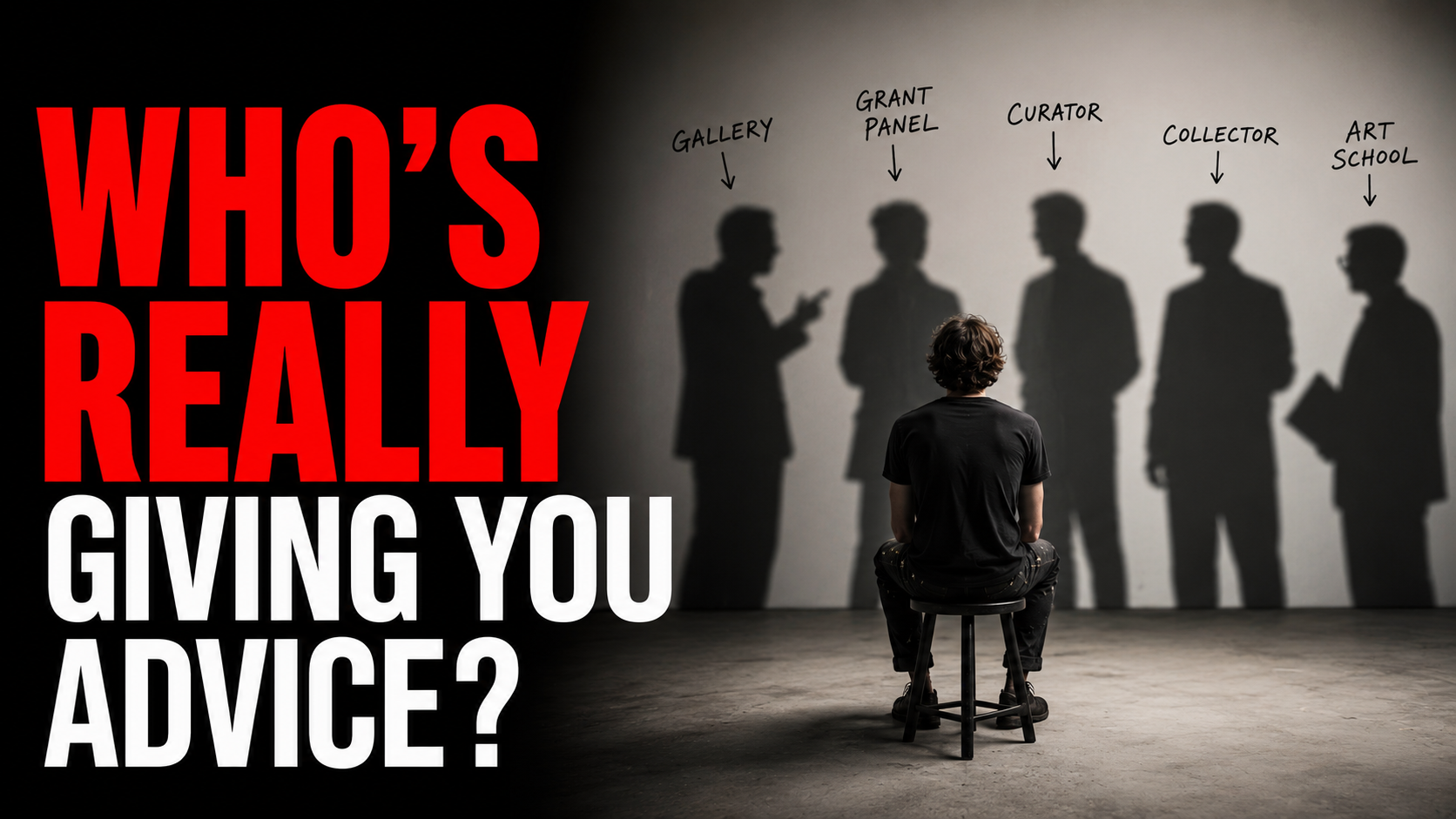
The first reframe is the most important one. A curator is not a selector who picks you out of a stack and confers career upon you. In the academic literature on contemporary curating, curators are described as brokers and boundary spanners. They translate between artists, institutions, audiences, funders, critics, and markets. They construct context. They carry reputational signals from one room to another. Sophia Krzys Acord, who did a careful ethnography of how exhibitions actually get made, found that curatorial meaning does not even fully exist in the curator’s head before a show. It emerges during installation, through joint decisions and tactical negotiation between the curator and the artist, in real time, in the space.
This matters because if you are picturing the curator as a gatekeeper, you will treat them like a gate. You will push at them. You will try to get past them. You will feel rejected when they do not respond.
If you picture them accurately, as a translator working under pressure across many constituencies, you will start asking a different question. You will stop asking how do I get this person to pick me, and you will start asking how do I become someone this person can work with well. Those are completely different questions, and they lead to completely different weeks.
Persistence is the game
There is a beautiful study by L. E. A. Braden that looked at 125 artists and 996 exhibitions at the Museum of Modern Art between 1929 and 1968. What she found is that repeated co-exhibition, the simple fact of being shown again, with similar peers, in serious contexts, was associated with greater long-term historical recognition. Even after controlling for solo shows and other markers, the strong symbolic ties created by repetition mattered. A separate large-scale study by Samuel Fraiberger and colleagues, looking at nearly half a million artists across thirty-six years and 143 countries, found something related and harder to swallow. Artists whose first exhibitions happen in prestigious venues tend to retain access to prestigious venues. Artists who start at the periphery face much higher dropout rates.
I tell you these findings not to be discouraging but to make a precise point. The curator relationship is not a one-shot lottery. It is a path-dependent process, and the most durable ties are the ones that produce a second project, then a third, then a catalogue text, then an introduction to a colleague at another institution. Each project carries the next.
So when you are talking to a curator, you should not be thinking about this show. You should be thinking about whether the way you are working with them now is the kind of work they will want to repeat. Almost no one thinks this way. Most artists are still treating the meeting like a final interview.
Three things curators look for
The research clusters around a few qualities that show up again and again. I will translate them into things you can practice this month.
The first is competence trust. Do you do what you say you will do. This sounds insultingly basic until you remember how many artists deliver work late, send files in the wrong format, change the installation requirements three days before opening, or disappear during a critical week. If you become someone whose word is reliable, you are already in a smaller pool than you think. Curators talk to each other. Reliability travels.
The second is interpretive trust. Can the curator understand your work, frame it, and handle its ambiguity without flattening it. This is partly your job. You have to be able to talk about your work in a way that gives a curator something to work with. Not a sales pitch. A real account of what the work is doing, what it refuses to do, what it is in conversation with. If you give them that, you are making their job possible. If you give them only a mood, you are asking them to invent your context, and they will invent something convenient for them rather than something accurate to you.
The third is moral trust. Will you treat the relationship fairly when things get difficult. Exhibitions are full of competing pressures, and curators work inside organisations with funders, boards, timelines, and politics that have nothing to do with you. Victoria Alexander’s work on museums shows just how many forces a curator is balancing at any given moment. If you read every delay or reframing as a personal slight, you will damage relationships that were not actually being damaged. Situational intelligence is part of the job.
Stop performing alignment
There is a study by Francesca Gino and colleagues that I think every artist should sit with for ten minutes. They found that catering to another person’s perceived preferences in high-stakes first meetings actually hurts performance. It increases anxiety. It makes you instrumental. It produces worse outcomes than just being yourself.
I see artists do the opposite of this constantly. They study a curator’s recent shows, identify the themes, and then quietly retrofit their own work to sound like it belongs in the next one. They use the curator’s vocabulary back at them. They sand off the parts of the practice that do not fit the program.
Here is what the research says about that strategy. It does not work. And on top of not working, it produces a relationship in which you are performing, which means the curator cannot actually see your work, which means even if they pick you, they will pick a version of you that is not durable. You will not be able to keep being that person. The relationship will collapse the moment you make work they did not predict.
The discipline is to be legible without being performative. Translate your work into terms a curator can use. Do not abandon the language and concerns that make the work yours.
Spread your bets
One more piece from the research. Mark Granovetter‘s classic finding on weak ties, plus Ronald Burt‘s work on structural holes, plus arts management research by Julia Richardson and her colleagues, all converge on the same point. Spreading your relational energy across many varied contacts beats concentrating it in a few prestigious ones. A few well-placed weak ties across different institutions, regions, and discourse communities will deliver more opportunities over time than a tight cluster of strong ties in one scene.
Practically, this means you should not be putting all your relational energy into one curator at one institution. Even if that relationship is going beautifully. Curators move jobs. Institutions change priorities. Programs end. The artists I see weather these changes well are the ones who built relationships horizontally as well as vertically. Peer artists, writers, smaller venues, technicians, educators, residency directors. That ecology is what keeps a single curator relationship from becoming structurally overburdened, and it is also what makes you more interesting to that curator, because you bring a network with you.
What I would do today.
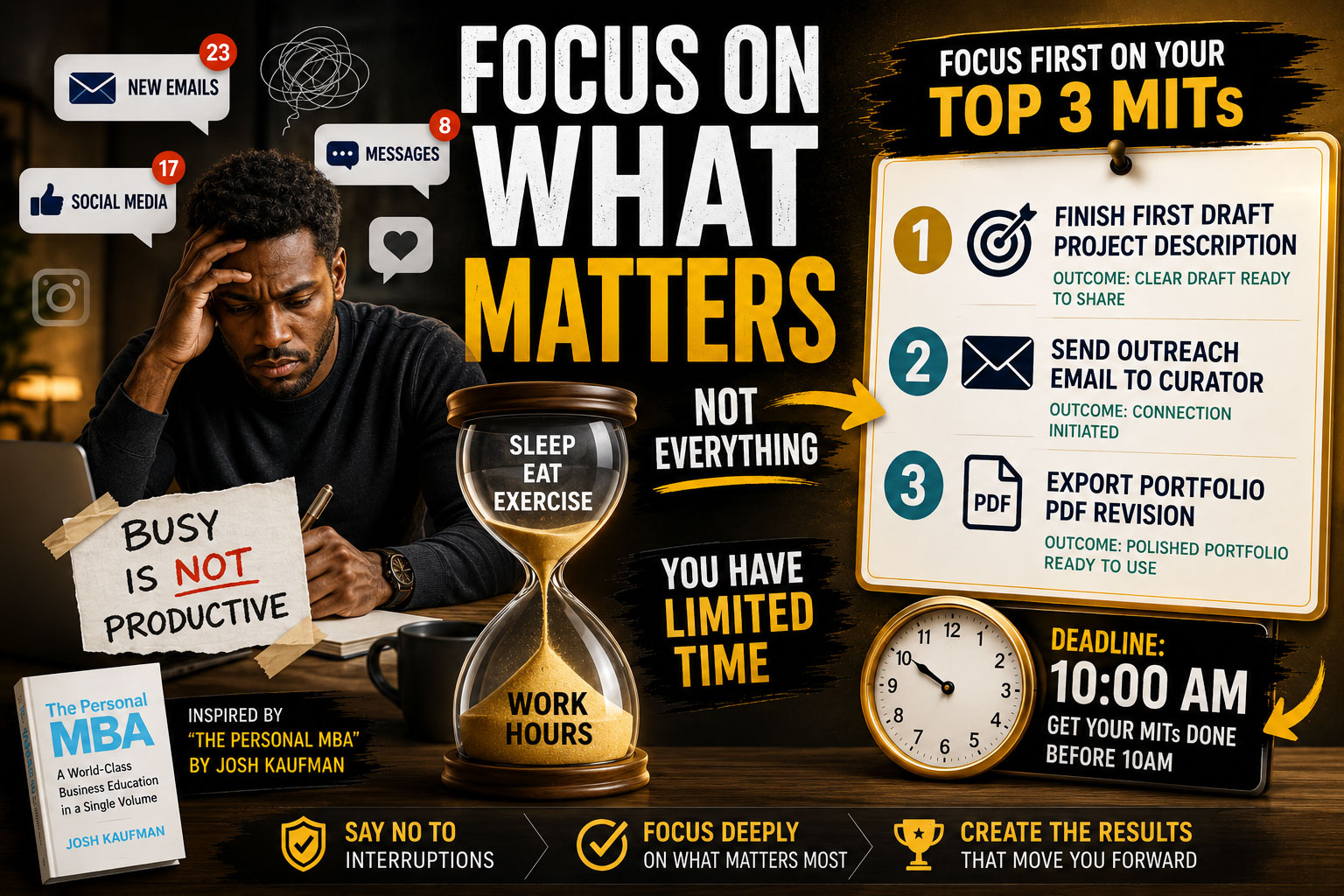
I would build a small list of curators and venues whose work genuinely overlaps with mine. Not the most prestigious. The most aligned. I would treat that list as a long-term observation project rather than a hit list. I would read what they write, see what they program, and learn the texture of their concerns before I ever reached out. To access new opportunities, you need a system to gather high quality signals that other artists are missing or not paying attention to. Send yourself a monthly email using Gmail’s schedule send feature reminding you to check that list. Subscribe to their newsletters where they exist. Follow the institutions on social media. Fifteen minutes a month gives you a rhythm of attention that almost no other artist is maintaining.
When I had something genuinely worth showing, I would reach out with specificity. A short note, a clear ask, real context for why this curator and this work belong in the same sentence. No flattery. No mood. If I got a response and a meeting, I would treat the conversation as the beginning of a working relationship, not the moment of judgment. I would ask one or two real questions about their constraints and ambitions, because that is the kind of information that lets you actually be useful to them later.
After a project, any project, with anyone, I would document it well, credit collaborators properly, send a concise thank-you, and then stay in periodic, low-pressure contact. Not constantly. Twice a year, with something real to say. The arc of a durable tie is built in serial small re-encounters, not in one dramatic breakthrough.
And I would diversify. Peers, writers, smaller venues, residencies in unlikely places. The curator who matters most to your career in five years may be someone who does not exist in your awareness yet, or someone currently working at a venue you would not have noticed.
Treat your artistic practice as a business and show yourself the respect and quality you deserve. The relationships that will carry your work are not built by the artists who push hardest at gates. They are built by the artists who become reliable, intelligible, and generative collaborators across many small encounters, over many years, in a wider ecology than any one person controls. That is a slower picture than the one most of us were sold. It is also the one the evidence supports.
Bless you.